Outdoor Kitchen Masonry That Stays Cleaner Around Grease and Cooking Heat
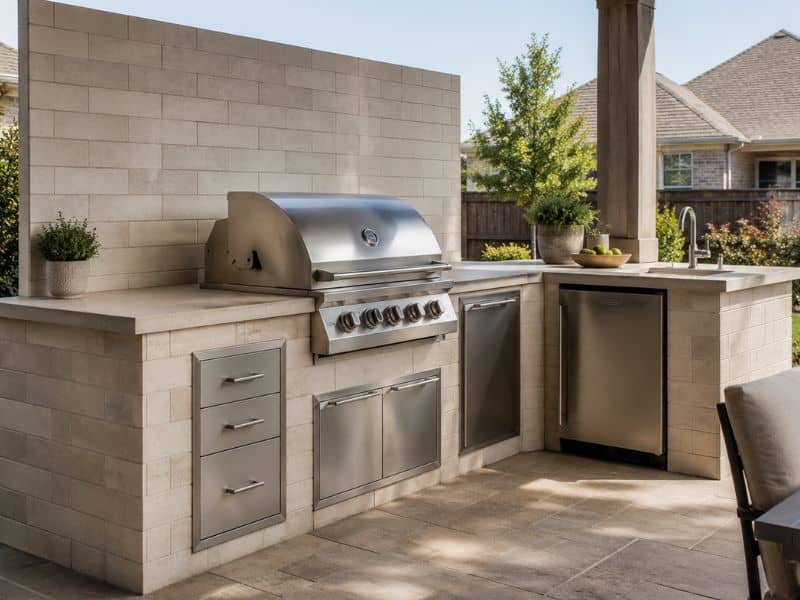
An outdoor kitchen gets used a lot in McKinney, Texas, where people grill almost all year long. But all that cooking means grease, smoke, and heat hit the brick and stone around your grill again and again. Pick the wrong materials, or skip a few small details, and you end up scrubbing stains that never fully come out. The good news is that most of this comes down to choices made before the kitchen is even built. Here’s what actually keeps outdoor kitchen masonry looking clean instead of dirty.
Choose Dense Masonry Surfaces Around Grills and Prep Areas
Not all brick and stone act the same way once grease touches them. Some materials soak up oil like a sponge. Once that happens, smoke and grease in the air start to darken the surface for good. Rough, bumpy stone looks nice in photos, but every little dip and groove becomes a spot where grime settles in and stays put.
Solid, tightly finished masonry does not soak up grease as easily. A quick wipe after cooking actually works, instead of just pushing grease deeper into tiny holes in the surface. When picking materials for the space right around the grill and counter, pick something solid, not just something that looks bumpy or textured. Save the rougher stone for spots farther from the heat and splatter, where looks matter more than easy cleaning.
Reduce Deep Mortar Joints That Collect Grease and Food Debris
Mortar joints are the thin lines of cement between bricks or stones. They seem like a small detail until you’re trying to clean around one for the fifth time this month. Deep, rough, or uneven joints act like tiny ditches. Grease, crumbs, and sauce drips settle in and dry there, and a rag alone won’t get it out.
A flat or slightly curved joint leaves much less space for food and grease to grab onto. A skilled mason can keep joints tight and even without making the finished kitchen look plain. This is a small detail most homeowners never think to ask about, yet it makes a real difference every time someone cooks.
Protect Masonry Behind the Grill From Heat and Smoke Stains
The wall right behind a grill takes a beating. It soaks up heat, catches rising smoke, and gets hit with grease every time something sizzles on the grates. Plain decorative stone or brick often was not built to handle that kind of heat and mess. Stains show up faster than most homeowners expect.
A proper wall behind the grill needs heat-proof material, enough space between it and the appliance, and a surface that can actually be wiped clean without getting damaged. Trying to save money here usually backfires within a season or two, once smoke stains set in and won’t come off no matter how hard you scrub.
Add Drip Edges and Overhangs to Keep Grease Off Cabinet Faces
Countertops that sit flush with the cabinet below them create a straight path for oil, sauce, and rain to run right down the brick or stone. Over time, that steady drip leaves streaks near doors, drawers, and corners, exactly the spots people notice first.
A countertop that sticks out a bit past the cabinet, with a small drip edge cut underneath, changes that path. Instead of running down the cabinet face, the liquid drips off the edge and misses the masonry below. It’s a small detail, easy to forget during planning, but it saves a lot of scrubbing later. Ask about drip edges before the countertop is built, since adding one afterward is much harder.
Plan Accessible Cleaning Zones Around Outdoor Kitchen Appliances
A grill jammed tight against a smoker, with barely enough room to slide a hand between them, is a cleaning nightmare waiting to happen. Grease pools in the gaps nobody can reach, and spills sit there for weeks because cleaning them means practically taking the whole setup apart.
Leave real space around each appliance while you are still planning the kitchen. Grease trays should actually pull out once everything is installed, not get blocked by a cabinet edge. Panels that need to open for cleaning or repairs need enough room to swing all the way open. A little extra planning here means spills get wiped up the same day they happen, instead of turning into a stain that needs strong cleaner and an hour of scrubbing.
Frequently Asked Questions
What masonry material is easiest to clean in an outdoor kitchen?
It comes down to how solid the surface is, how rough it feels, how the joints are built, and the finish, not simply whether the kitchen uses brick or stone. Smooth, solid surfaces are usually easier to keep clean than rough stone that traps grease in its grooves.
Should outdoor kitchen masonry be sealed against grease?
A sealer made for outdoor masonry can help block some grease, depending on the material. It has to match the exact brick, stone, and mortar you have, plus the location and how much heat that spot will face.
Can grease permanently stain brick or natural stone?
Yes, soft or bumpy masonry can soak up oil if a spill sits there too long. Wiping up a spill right away, using a cleaner made for that specific material, works far better than scrubbing hard with strong chemicals after the stain has already set in.
What should be installed behind an outdoor grill?
A wall material that won’t burn, can handle heat, and wipes clean easily, built with the space the grill maker says you need around it. Plain decorative stone that wasn’t made to handle this kind of heat is not a safe stand-in.
How often should masonry around an outdoor kitchen be cleaned?
A light wipe-down should happen right after any cooking session where grease splatters. Deeper cleaning depends on how often you cook, what fuel you use, how much weather the area gets, and how rough or soft the masonry is to start with.