Choosing Exterior Finishes That Complement Existing Brick Homes

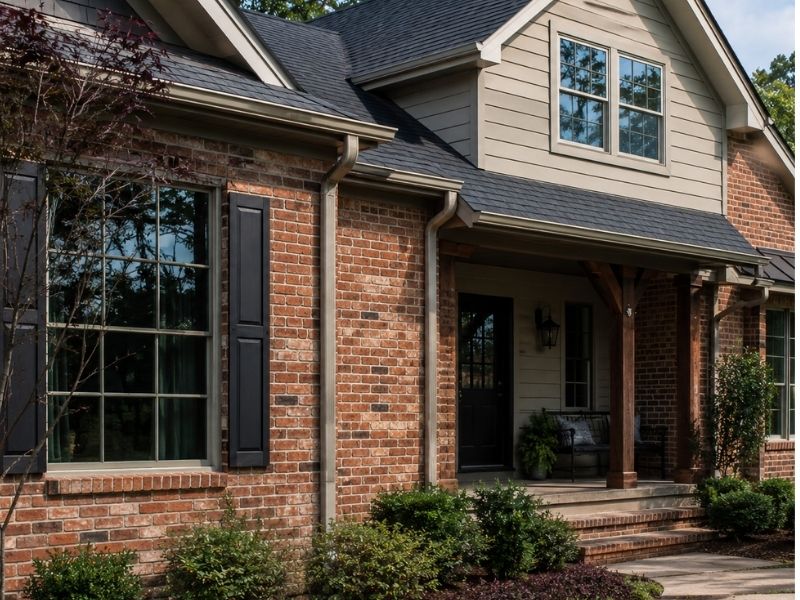
Exterior renovation of an existing brick home in McKinney, TX, featuring complementary siding, trim, roofing, and wood accents.

An exterior renovation gets harder when your home already has brick. Brick carries color, texture, and age that new materials have to live next to. You don’t need to match it or hide it. You just need finishes that sit well beside it. Do that and the whole house looks planned. Miss it and the new work looks bolted on.

Matching New Exterior Materials to the Existing Brick’s Undertones

Start by reading the brick’s undertone, not just its main color. Most brick leans warm, cool, or neutral underneath the surface shade. Red and brown brick usually run warm. Gray and some tan brick can run cool. Once you know the undertone, you can pick finishes that agree with it. Warm brick pairs well with creamy whites, soft greens, and earthy siding tones. Cool brick sits better with grays, cooler whites, and darker charcoal finishes. Mixed brick, which blends several colors, gives you more freedom since it already holds a range of tones. Pull one color from that mix and build your palette around it. You’re coordinating undertones here, not copying the brick, and that difference keeps the look natural.

Using Texture Contrast Without Making an Older Brick Home Look Disconnected

Brick already brings a lot of texture. So the smart move is to balance it, not compete with it. A smooth finish like flat panel siding or clean stucco can calm a busy brick wall and give the eye a place to rest. On the other hand, adding more rough texture next to brick can make an older home feel heavy and cluttered. Contrast works best when one surface stays quiet. If your brick is rough and varied, lean toward smoother new finishes. If your brick is flat and uniform, a little added texture can bring life without clashing. Keep the change gradual so the old and new parts still read as one home. Small, steady contrast beats a sharp jump every time.

Choosing Exterior Finishes for Additions, Garages, and Other New Sections

New additions and garages create a spot where old brick meets new material. That seam is where most projects succeed or fail. To keep it clean, carry something familiar from the original home into the new section. That could be a matching roofline, a shared trim color, or a band of the same brick at the base. Proportion matters too. A large blank wall of new siding next to detailed brick can look off, so break it up with windows, trim, or a change in material partway up. Place the transition at a natural corner or edge rather than the middle of a flat wall. When the new section borrows a few cues from the old one, it feels added on purpose instead of stuck on later.

Coordinating Roof, Trim, Doors, and Accent Materials During an Exterior Renovation

Brick never stands alone on a house. Your roof, trim, doors, gutters, and any stone or metal all share the same view. So judge the brick as part of that whole group, not by itself. Start with the pieces you can’t easily change, like the roof color and the brick. Build the rest of your palette to agree with those fixed features. Pick a trim color that softens the gap between the brick and the siding. Choose a door color that adds a little pop without fighting the brick tone. Keep your accent materials in the same temperature family, warm with warm or cool with cool. When every element pulls in one direction, nothing on the house competes for attention during an exterior renovation.

Testing Exterior Finish Combinations Before Making Permanent Changes

Never commit to a finish based on a small chip or a screen image. Colors shift a lot once they’re outside and next to real brick. So get large samples and hold them right against the brick wall. Look at them in morning light, midday sun, and evening shade. A siding color that looks warm at noon can turn gray and flat by dusk. Check the samples on both the sunny and shady sides of the house since each side reads differently. Leave the samples up for a few days and walk past them the way visitors will. This slow test costs almost nothing, yet it saves you from a color clash you can’t undo later. Trust what you see outdoors over what you saw in the store.

Frequently Asked Questions

What exterior finishes work best with an older brick home?

Fiber cement siding, wood or engineered trim, stucco, and stone all pair well with older brick. The best pick depends on your brick’s undertone and texture rather than a single rule. Warm brick suits earthy siding and creamy trim, while cooler brick suits grays and crisp whites. Choose a finish that shares the brick’s temperature so the two surfaces feel related.

Should new siding match the existing brick color exactly?

No, an exact match rarely works and often looks flat. Brick has natural color variation that flat siding can’t copy, so a direct match tends to fall short. Instead, pull one tone from the brick and use a lighter or softer version of it for the siding. That gives you a coordinated look with enough contrast to keep both surfaces interesting.

Can different exterior materials be combined with brick?

Yes, brick mixes well with siding, stucco, wood, metal, and stone when the tones agree. The trick is limiting yourself to two or three main materials so the house stays calm. Give each material its own clear area rather than scattering them across the walls. Keep all of them in the same warm or cool family, and the mix will look intentional.

How do I choose trim colors that complement existing brick?

Trim works best as the bridge between the brick and the rest of the finishes. Pick a color a few shades lighter or darker than the brick, staying in the same undertone. Creamy whites and soft tans suit warm brick, while cooler whites and grays suit cool brick. Test the trim color right against the brick outdoors before you paint anything.

What should I consider before adding a new exterior finish to an older home?

Look at the fixed features first, meaning the brick, the roof, and anything you won’t replace. Match your new finish to those elements instead of choosing it on its own. Check how the finish handles your climate and how much upkeep it needs over time. Then test full samples against the brick in real daylight before you make the change permanent.

Brick Patterns That Change the Look and Feel of Home Exteriors

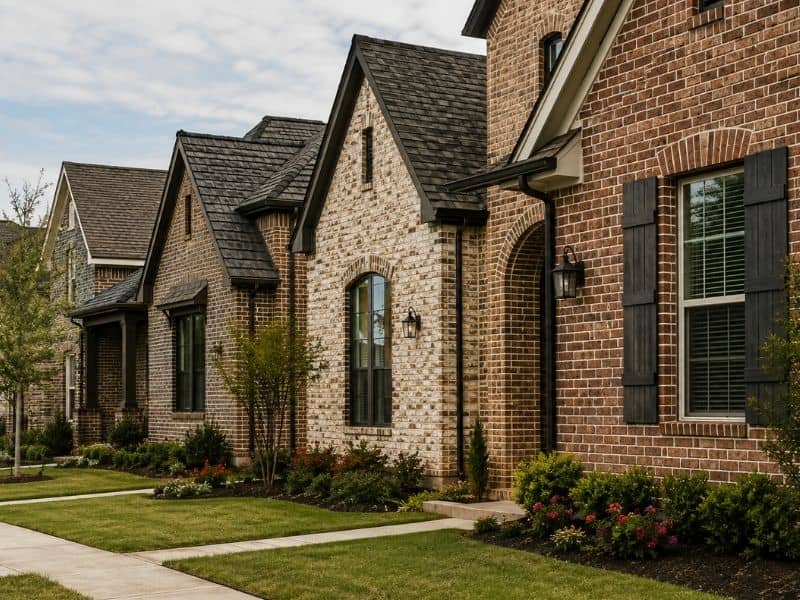
Brick patterns on traditional and modern home exteriors in McKinney, Texas

Brick design is about more than color. The way bricks line up on a wall can change how a whole house feels from the street. Some patterns look neat and traditional. Others feel loose and modern. Homeowners are often surprised at how much a simple layout choice can shift a home’s overall style. If you’re working from a construction survey, that document already shows your exact wall lines and elevations, which makes it easier to picture how a new brick pattern will actually sit on your facade.

Running Bond vs. Stack Bond for Different Exterior Styles

Running bond is the pattern most people picture when they think of brick. Each row shifts halfway over the row below it, creating a staggered look that reads as classic and familiar. It works on almost any style of home, which is part of why it shows up so often on older and newer builds alike.

Stack bond is the opposite. Every brick lines up directly above the one below it, forming clean vertical and horizontal lines. This creates a more geometric look with sharp, repeating grid lines. On a modern home with flat roof lines and large windows, stack bond can feel intentional and current. On a home with more traditional trim and detailing, the same pattern can feel too rigid. The choice comes down to whether you want the wall to feel steady and traditional, or crisp and structured.

Herringbone and Basketweave Patterns as Exterior Accents

Herringbone lays bricks at an angle, forming a zigzag that catches light differently than a flat pattern. Basketweave arranges small groups of bricks in alternating directions, creating a woven look. Both patterns are busier than running bond or stack bond, so they work best on a smaller section of the exterior rather than the whole house.

A herringbone panel below a bay window or a basketweave insert near an entry can turn a plain wall into something worth a second look. These patterns pair especially well with older architectural styles, since they echo detail work you’d find on historic homes. They can also work on updated exteriors when used sparingly, as long as the rest of the facade stays simple enough to let the accent stand out instead of competing with other busy elements.

How Brick Pattern Scale Affects the Appearance of a Home

Scale changes how a pattern reads from the street. Tight, repetitive patterns with small joints tend to make a wall feel dense and detailed. From a distance, this can make a home look more textured and grounded. Up close, though, a tightly packed pattern can feel overwhelming on a smaller house, since there’s less flat space for the eye to rest.

Looser, more open layouts with wider joints do the opposite. They make a wall feel calmer and give the brick more breathing room. On a large elevation, this openness can keep the house from feeling too heavy or busy. On a smaller home, it can actually make the exterior feel bigger, since there’s less visual clutter competing for attention. Matching pattern scale to house size is one of the easiest ways to avoid a mismatched look.

Using Brick Layouts to Connect Traditional and Modern Home Styles

Brick pattern is one of the few design choices that can bridge two very different architectural styles on the same street. A traditional running bond pattern paired with modern trim colors and simple black window frames can create a house that feels updated without losing its classic bones. On the flip side, a stack bond pattern combined with a gable roof and traditional shutters can soften a modern layout so it doesn’t feel out of place next to older homes nearby.

The key is looking at what’s already fixed on the house. Roof shape, window placement, and trim style aren’t easy to change, so the brick pattern should work with those features instead of against them. A pattern that ignores the home’s existing lines will always look like an afterthought, no matter how well it’s installed.

Choosing a Brick Design That Keeps the Exterior Visually Balanced

Every brick pattern pulls a certain amount of attention. Simple patterns fade into the background and let other features, like a porch, a door color, or landscaping, take the spotlight. Complex patterns do the opposite. They become the focal point, so everything else needs to stay simpler to avoid competing.

Before choosing a layout, think about what you actually want people to notice first. A house with a striking front door or a detailed porch railing usually looks best with a quieter brick pattern that supports those features rather than pulling focus away from them. A plainer home with fewer architectural details can handle a bolder pattern, since there’s less competition for attention. Balance isn’t about picking the fanciest option. It’s about matching the pattern’s visual weight to what the rest of the house is already doing.

Frequently Asked Questions

What is the most common brick pattern for home exteriors? 

Running bond is by far the most common choice. Its staggered rows create a familiar, easy-to-read look that works across almost every architectural style, from older colonials to newer builds.

Which brick pattern looks most modern? 

Stack bond tends to read as the most contemporary option. Its aligned grid lines create a clean, geometric look that pairs well with flat roof lines and minimal trim.

Which brick pattern is best for a traditional-style home? 

Running bond and herringbone accents both work well on traditional homes, since they echo patterns often seen on older, historic builds. Neither is a strict rule, though, since plenty of traditional homes use other layouts successfully.

Can different brick patterns be used on the same house? 

Yes. A common approach is using one primary pattern across most of the exterior and a second pattern, like herringbone or basketweave, as a smaller accent near an entry or a window.

How do I choose the right brick design for my home? 

Look at your home’s architectural style, the size of the facade, and any existing features you want to highlight. The pattern should support those elements rather than pull attention away from them.