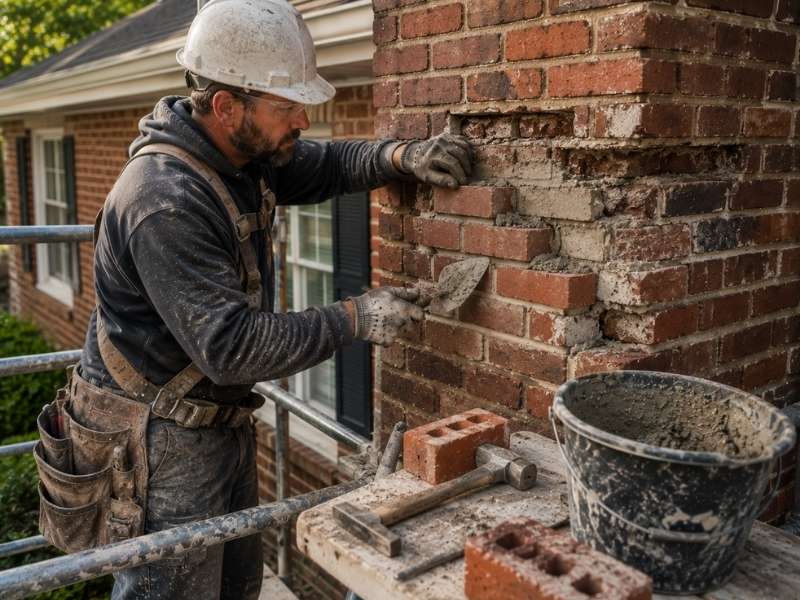
Most masonry jobs are straightforward, but some are anything but. A bulging wall, a cracked chimney high off the ground or a custom build can stump anyone but a brickmason who has seen it all. These harder jobs are where real skill shows, since there’s no standard fix to copy. A seasoned brickmason reads the situation, weighs the options and solves the problem without creating new ones. That judgment is what sets complex work apart from routine bricklaying.
Diagnose the Real Problem First
The hardest part of a tough masonry job is often finding the true cause. Cracks, leaning and crumbling are symptoms, not the disease. Treating the symptom alone wastes money. A skilled brickmason reads the pattern of damage to trace it back to the source.
Different cracks tell different stories. Stair-step cracks through the mortar joints often point to foundation movement. Vertical cracks can signal overloading or settling. A bulge in a wall usually means moisture has gotten behind the brick and pushed it outward.
Finding the root cause shapes the whole repair. If water is the culprit, fixing drainage comes before any new brick goes up. A mason who skips this step ends up repairing the same wall again a year later.
Reach Difficult Spots Safely
Some of the toughest masonry sits in the hardest places to reach. Chimneys rise high above the roofline, tall walls climb past easy ladder height, and tight corners leave little room to work. Reaching these areas safely is a skill of its own.
A professional plans access before the repair begins. Proper scaffolding or staging gives a stable place to work, which matters more the higher the job goes. Rushing this setup is how accidents and sloppy work happen.
Height also changes how the work gets done. Materials have to be hauled up safely, and mortar has to be mixed and used before it sets in the open air. An experienced brickmason manages all of this so the repair up high matches the quality of work down low.
Stabilize and Rebuild Failing Walls
When a wall is already failing, the fix is bigger than swapping a few bricks. A section that bulges, leans or crumbles may need partial tear-down and rebuilding to make it sound again. This is delicate work, since the rest of the structure has to stay supported throughout.
A careful brickmason braces the surrounding masonry before removing the damaged part. Taking out a failing section without support can bring down more than intended. Temporary shoring holds everything in place until the new brick is laid and cured.
Rebuilding then restores both strength and looks. The mason ties the new section firmly into the sound brick around it, so the wall acts as one piece again. Done right, the repaired area carries its share of the load just like the original.
Build Custom Masonry Features
Custom work is where masonry turns from repair into craft. Arches over doorways, curved garden walls, columns and detailed steps all demand planning that standard straight walls don’t. There’s no kit for these, so the mason works them out by hand.
An arch is a good example. It needs a temporary form to hold its shape while the brick is laid. The bricks have to be cut and angled so they lock together under their own weight. Get the geometry wrong and the arch won’t stand.
Curves and columns bring their own puzzles. A curved wall takes careful brick spacing so the bend looks smooth rather than jagged. This kind of work rewards a mason who plans every course before lifting a trowel.
Reinforce Masonry for the Long Haul
Solving a complex problem means making sure it doesn’t come back. After a major repair, a good brickmason fixes the weaknesses that caused the trouble. That often means more than just new brick and mortar.
A few reinforcements make a lasting difference.
- Steel lintels or proper arches over openings, which carry the weight that otherwise cracks unsupported brick above doors and windows.
- Wall ties that lock the brick to the structure behind it, keeping a wall from bulging or pulling away.
- Weep holes and flashing that give trapped water a way out before it damages the brick.
These additions tackle the root causes rather than the symptoms. A wall that’s properly supported and drained holds its shape far longer. The mark of strong work is a repair that simply lasts.
Frequently Asked Questions
How does a brickmason find the cause of a masonry problem?
A mason studies the pattern of damage, since different cracks point to different causes. Stair-step cracks often mean foundation movement, while a bulging wall usually signals trapped water. Tracing the symptom to its source is what makes the repair last instead of returning.
Can serious cracks or bulging walls be repaired?
Yes, though serious damage often needs more than a patch. A mason may brace the area, remove the failing section and rebuild it tied into the sound brick around it. The key is fixing the underlying cause so the same damage doesn’t come back.
How do masons safely work on chimneys and tall walls?
They set up proper scaffolding or staging to create a stable place to work at height. Safe access matters as much as the masonry itself, since rushed setups lead to accidents and sloppy results. Good planning lets the work up high match the quality down low.
Can a brickmason build custom shapes like arches?
Yes, custom features such as arches, curves and columns are part of skilled masonry. An arch needs a temporary form and carefully cut brick so the pieces lock together and hold. This kind of work takes planning and a steady, experienced hand.
What makes a complex masonry repair last?
Lasting repairs fix the cause, not just the visible damage. Adding support over openings, tying walls to the structure and improving drainage all keep problems from returning. A repair built on solid diagnosis and reinforcement holds up for years.
