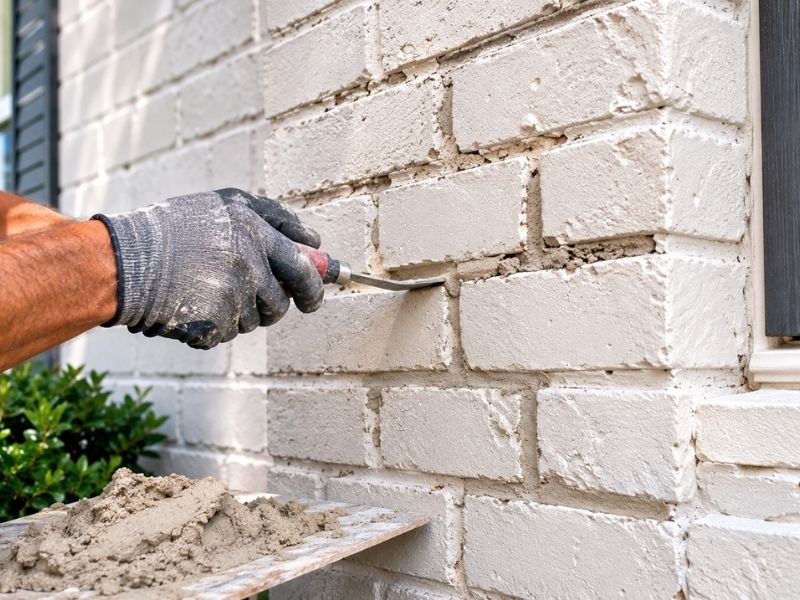
Fresh paint on a brick wall can look great for a season and then start to blister. When it fails that fast, the mortar underneath is usually the reason. Painted brick depends on solid joints. If the mortar has cracked or crumbled, water slips behind the coating and pushes it right off the wall. Homes around McKinney feel this more than most, because the clay soil and wide temperature swings work joints loose over time. So before you recoat, the mortar comes first. Fix the joints, dry the wall, then paint. That order saves you from touching up the same spots again next year.
Why Damaged Mortar Should Be Repaired Before Recoating Painted Brick
Damaged mortar has to be fixed first, because the joints control how water moves through a wall. Cracked, loose, or worn mortar opens small gaps. Rain and humidity seep in, sit behind the brick, and then push back outward. Paint takes the hit. It blisters, bubbles, or peels away in sheets. New mortar closes those gaps and gives the coating a firm, even base to grip. A wall with sound joints holds paint far longer. Paint over bad joints, though, and you seal the damage in. The moisture stays trapped, and the fresh coat fails early.
Finding Hidden Moisture Paths Before Applying New Paint
Water rarely enters a wall in one obvious spot. It finds several small paths, and each one needs attention before you paint. Walk the wall on a dry day and look closely at these common entry points:
- Open or cracked mortar joints that never got repaired
- Old caulk or sealant that has dried out and split
- Gaps around flashing at windows, sills, and the roof line
- Bare or porous brick that soaks up rain like a sponge
Mark what you find. Seal the joints, swap out tired sealant, and close the flashing gaps. New paint won’t stop a leak. It only covers one for a while.
Surface Preparation Steps That Improve Paint Adhesion
Once the mortar cures, prep work decides how well the new coat sticks. Start by cleaning the whole wall. Scrub off dirt, mildew, and chalky buildup with a stiff brush and a gentle masonry cleaner. Scrape away any old paint that flakes or lifts, since fresh paint can’t bond to a loose layer. If you see white, powdery efflorescence, brush it off dry and let the salts clear before you rinse. Then give the wall real time to dry. Damp brick traps moisture under the coating. Do a last close pass for missed cracks or thin joints. A clean, dry, solid surface holds paint the way it should.
Choosing Compatible Paint Systems After Masonry Repairs
The new coating has to work with the repaired mortar, not fight it. Brick and mortar need to breathe. A film that traps vapor inside will lift the same way the old paint did. Look for a breathable masonry coating that lets water vapor pass while it blocks liquid rain. Match your primer to that topcoat, because a mismatched primer can peel and take the color with it. Give fresh mortar time to cure before you paint, since new mortar stays damp and a little alkaline for weeks. Paint applied too soon can discolor or fail. A little patience here protects the whole job.
Long-Term Maintenance Tips for Recoated Painted Brick in McKinney
A recoated wall lasts longest when you check it now and then. Twice a year, walk the perimeter and look for hairline cracks, chalking, or spots where paint starts to lift. Small mortar repairs done early stop water before it spreads. Keep gutters and downspouts clear so runoff doesn’t sheet down the brick and pool at the base. Trim back sprinklers that spray the wall. McKinney’s wet springs and hot, dry summers push brick through a lot of movement each year, so steady upkeep matters more here than in milder spots. Catch the little things, and you’ll put off a full repaint for many more years.
Frequently Asked Questions
Should mortar be repaired before repainting brick?
Yes. Mortar joints are the main path for water, so cracked or loose mortar has to be fixed first. Paint laid over bad joints traps moisture against the brick, and the coating peels early. Sound mortar gives new paint a stable base to hold onto.
How long should repaired mortar cure before applying paint?
Give it time to dry and harden. Many paint makers suggest waiting about 28 days for cement-based mortar to fully cure. Fresh mortar stays damp and alkaline, which can discolor or lift a coating. Check your paint’s label, since cure times vary by product.
Can new paint hide cracked mortar joints?
Not for long. A coat of paint may cover a crack on the surface, but it won’t seal the gap behind it. Water keeps moving through, and the paint blisters over that same joint within a season or two. Repair the mortar first.
Why does painted brick peel after a few years?
Usually because moisture is getting behind the coating. Cracked joints, failed sealant, or a paint that can’t breathe all trap water against the brick. As that water moves in and out, it lifts the paint off the wall. Fixing the source stops the cycle.
What type of paint works best on repaired brick masonry?
A breathable masonry coating is the safest pick. It lets water vapor escape while it keeps rain out, so pressure doesn’t build under the film. Pair it with a matching masonry primer, and let the repaired mortar cure fully before the first coat goes on.
