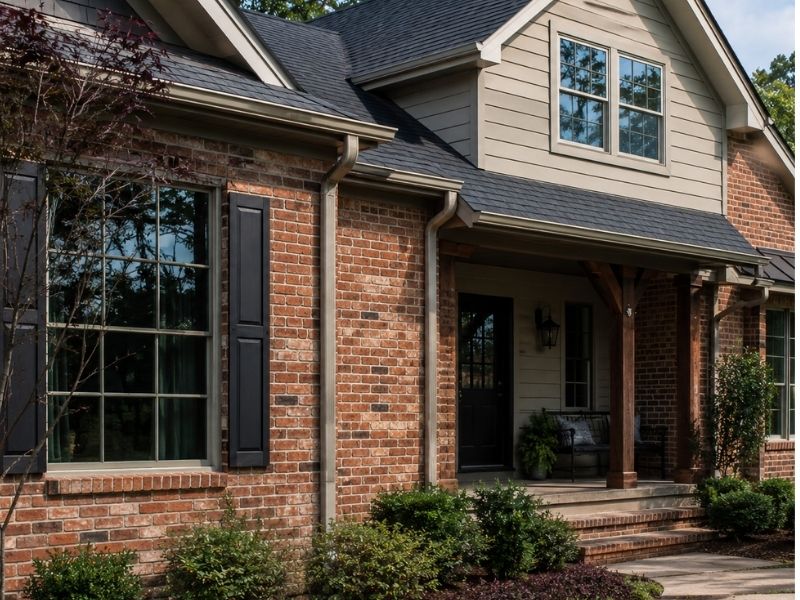
An exterior renovation gets harder when your home already has brick. Brick carries color, texture, and age that new materials have to live next to. You don’t need to match it or hide it. You just need finishes that sit well beside it. Do that and the whole house looks planned. Miss it and the new work looks bolted on.
Matching New Exterior Materials to the Existing Brick’s Undertones
Start by reading the brick’s undertone, not just its main color. Most brick leans warm, cool, or neutral underneath the surface shade. Red and brown brick usually run warm. Gray and some tan brick can run cool. Once you know the undertone, you can pick finishes that agree with it. Warm brick pairs well with creamy whites, soft greens, and earthy siding tones. Cool brick sits better with grays, cooler whites, and darker charcoal finishes. Mixed brick, which blends several colors, gives you more freedom since it already holds a range of tones. Pull one color from that mix and build your palette around it. You’re coordinating undertones here, not copying the brick, and that difference keeps the look natural.
Using Texture Contrast Without Making an Older Brick Home Look Disconnected
Brick already brings a lot of texture. So the smart move is to balance it, not compete with it. A smooth finish like flat panel siding or clean stucco can calm a busy brick wall and give the eye a place to rest. On the other hand, adding more rough texture next to brick can make an older home feel heavy and cluttered. Contrast works best when one surface stays quiet. If your brick is rough and varied, lean toward smoother new finishes. If your brick is flat and uniform, a little added texture can bring life without clashing. Keep the change gradual so the old and new parts still read as one home. Small, steady contrast beats a sharp jump every time.
Choosing Exterior Finishes for Additions, Garages, and Other New Sections
New additions and garages create a spot where old brick meets new material. That seam is where most projects succeed or fail. To keep it clean, carry something familiar from the original home into the new section. That could be a matching roofline, a shared trim color, or a band of the same brick at the base. Proportion matters too. A large blank wall of new siding next to detailed brick can look off, so break it up with windows, trim, or a change in material partway up. Place the transition at a natural corner or edge rather than the middle of a flat wall. When the new section borrows a few cues from the old one, it feels added on purpose instead of stuck on later.
Coordinating Roof, Trim, Doors, and Accent Materials During an Exterior Renovation
Brick never stands alone on a house. Your roof, trim, doors, gutters, and any stone or metal all share the same view. So judge the brick as part of that whole group, not by itself. Start with the pieces you can’t easily change, like the roof color and the brick. Build the rest of your palette to agree with those fixed features. Pick a trim color that softens the gap between the brick and the siding. Choose a door color that adds a little pop without fighting the brick tone. Keep your accent materials in the same temperature family, warm with warm or cool with cool. When every element pulls in one direction, nothing on the house competes for attention during an exterior renovation.
Testing Exterior Finish Combinations Before Making Permanent Changes
Never commit to a finish based on a small chip or a screen image. Colors shift a lot once they’re outside and next to real brick. So get large samples and hold them right against the brick wall. Look at them in morning light, midday sun, and evening shade. A siding color that looks warm at noon can turn gray and flat by dusk. Check the samples on both the sunny and shady sides of the house since each side reads differently. Leave the samples up for a few days and walk past them the way visitors will. This slow test costs almost nothing, yet it saves you from a color clash you can’t undo later. Trust what you see outdoors over what you saw in the store.
Frequently Asked Questions
What exterior finishes work best with an older brick home?
Fiber cement siding, wood or engineered trim, stucco, and stone all pair well with older brick. The best pick depends on your brick’s undertone and texture rather than a single rule. Warm brick suits earthy siding and creamy trim, while cooler brick suits grays and crisp whites. Choose a finish that shares the brick’s temperature so the two surfaces feel related.
Should new siding match the existing brick color exactly?
No, an exact match rarely works and often looks flat. Brick has natural color variation that flat siding can’t copy, so a direct match tends to fall short. Instead, pull one tone from the brick and use a lighter or softer version of it for the siding. That gives you a coordinated look with enough contrast to keep both surfaces interesting.
Can different exterior materials be combined with brick?
Yes, brick mixes well with siding, stucco, wood, metal, and stone when the tones agree. The trick is limiting yourself to two or three main materials so the house stays calm. Give each material its own clear area rather than scattering them across the walls. Keep all of them in the same warm or cool family, and the mix will look intentional.
How do I choose trim colors that complement existing brick?
Trim works best as the bridge between the brick and the rest of the finishes. Pick a color a few shades lighter or darker than the brick, staying in the same undertone. Creamy whites and soft tans suit warm brick, while cooler whites and grays suit cool brick. Test the trim color right against the brick outdoors before you paint anything.
What should I consider before adding a new exterior finish to an older home?
Look at the fixed features first, meaning the brick, the roof, and anything you won’t replace. Match your new finish to those elements instead of choosing it on its own. Check how the finish handles your climate and how much upkeep it needs over time. Then test full samples against the brick in real daylight before you make the change permanent.
