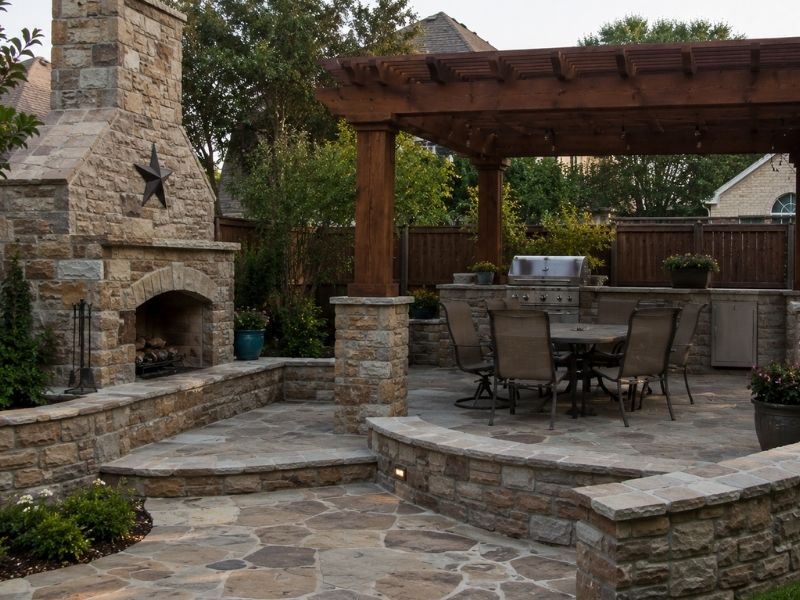
Natural stones has a way of making a backyard feel finished. It looks good and lasts outside. Homeowners reach for it when they want an outdoor feature that feels one of a kind. Since every piece comes out of the ground a little different, no two builds turn out exactly alike. That small bit of chance is a big part of why people love it.
Why Natural Stone Works Well for Custom Outdoor Features
Stone starts with an edge that man-made materials struggle to copy. Each slab or block carries its own color, grain and shape. Because of that, a wall or bench built from it never feels stamped out of a factory. You get a look that belongs to your yard and no one else’s.
That natural range also gives you room to plan. You can pick lighter stone for a calm feel or darker stone for something bold. When a builder sets each piece by hand, the feature matches the space around it. So the result feels made for the property instead of dropped onto it.
Stone works for both small touches and large builds. A single accent can lift a plain corner, and a full seating wall can anchor a whole yard. That range lets you start small and grow later.
Natural Stone Gives Every Outdoor Feature a Unique Appearance
Color is the first thing people notice. Stone can run warm and sandy or cool and gray, and many pieces mix several tones at once. As sunlight moves across the surface through the day, those colors shift a little. So the same feature can look one way at noon and softer at dusk.
Texture adds the next layer. Some stone feels rough and rugged. Other cuts come out smooth and clean. Veining, the thin lines that run through many stones, gives each piece its own pattern. You can’t fake that with paint or a stamp.
Homeowners can lean into these traits. If you want a rustic garden, pick stone with heavy texture and mixed tones. If you want a modern patio, choose flatter cuts in one steady color. Either way, the natural marks do the design work for you.
Choosing Natural Stone for Long-Term Outdoor Durability
Outdoor features take a beating. Rain, sun, frost and daily foot traffic all wear on the surface over time. That’s why the type of stone you pick matters so much. Some stones shrug off water and cold, while softer ones can crack or flake in rough weather.
Denser stone tends to last longer outside. Granite and many quartzites hold up well against moisture and heavy use. Softer picks, like some sandstones, may need a sealer or a drier spot. When you match the stone to the weather it will face, the feature stays strong for years.
Where you place a feature counts too. Stone near a pool sees constant splashing, so it needs to handle water without turning slick. A fire feature needs stone that won’t crack under heat. Sort out these details early, and you skip costly repairs later.
Custom Natural Stone Features Can Support Different Backyard Uses
The best stone feature starts with a simple question. How do you actually use your yard? Once you know the answer, the design gets easy. A family that hosts often may want a long seating wall, while a quiet gardener may prefer low stone borders.
Here are a few ways homeowners put natural stone to work:
- Seating areas that stay cool and sturdy through every season
- Garden borders that hold soil in place and frame your plants
- Walkways that guide people through the yard without turning muddy
- Fire features that give a safe, solid base for warmth on cool nights
Each of these can bend to fit your space. A narrow yard might need a slim path, while a wide one can carry a full patio and a fire pit. When the feature matches how you live outside, you reach for it far more. That’s the real payoff of building around your habits.
How Natural Stone Can Create a More Cohesive Backyard Design
One stone feature is nice, but a set of them can tie a whole yard together. When your walkway, borders and seating share a stone family, your eyes move through the space with ease. Nothing looks random or bolted on. The yard reads as one plan instead of a stack of separate projects.
You don’t have to use the same stone everywhere. Instead, pick tones and textures that sit well next to each other. A gray path can pair with a darker gray wall, and both can frame a lighter garden border. These small links pull the whole design into one steady look.
Placement matters as much as material. A fire feature set near a seating wall gives people a clear spot to gather. Plan these spots together, and the yard starts to feel like one room with no walls.
Frequently Asked Questions
Why is natural stone popular for custom outdoor features?
Natural stone is popular because each piece looks a little different from the next. That natural range gives homeowners real freedom in how they design. It also carries a distinct look that man-made products rarely match. So the finished feature can feel unique to the property rather than mass produced.
What types of outdoor features can be made with natural stone?
Natural stone works for many parts of a backyard. Homeowners use it for seating, walkways, garden borders and fire features. It also fits smaller landscape accents that dress up a plain spot. With the right cut and setup, it can shape almost any custom outdoor element you have in mind.
Does every natural stone installation look the same?
No, and that’s a big part of its charm. Color, texture, shape and veining all shift from one piece to the next. Because of that, two features built from the same stone type can still look different. Each install ends up with its own character.
Is natural stone a good choice for a custom backyard project?
It can be a strong pick when the details line up. The stone type, the way it’s set and the design all need to suit the space. Local weather and how you use the yard matter too. When these pieces fit together, natural stone holds up well and looks great for years.
How can homeowners choose the right natural stone for an outdoor feature?
Start with the job the feature needs to do. Then think about the look you want and the materials already around your yard. Local weather and the care each stone needs should guide the choice as well. Weighing all of these together helps you land on a stone that fits both your style and your space.
