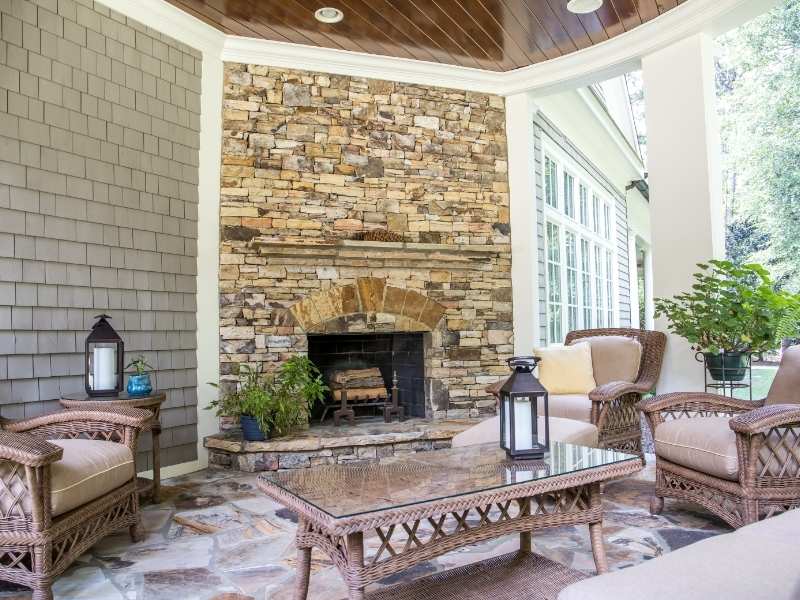
A fire changes how a backyard gets used. People who rarely step outside after dinner will pull up a chair when there’s a warm glow to gather around. An outdoor fireplace is also a heavy, permanent structure, so the choices you make early will shape how the space feels for decades.
The best outdoor fireplace projects are planned as part of the whole space around the firebox. Where people sit, how smoke moves, what the patio is made of, and where rainwater goes all matter as much as the look of the chimney. If you plan those pieces together, you’ll end up with a gathering spot that looks built-in and holds up well.
Planning an Exterior Fireplace for Comfortable Outdoor Gatherings
A comfortable outdoor fireplace sits where people already gather and faces the main seating area. It also needs enough distance from the house, trees, and property lines to meet local rules. Start by watching how your family uses the yard now. The back door, the outdoor kitchen, and the path to the lawn all create natural traffic patterns, and a fireplace that works with them will get used to far more than one tucked into a far corner.
Size the fireplace to the space. A tall stone chimney can overwhelm a small patio, while a low firebox can look lost against a large two-story home. Leave room for chairs in a loose half circle, plus a clear walking lane behind them so guests aren’t squeezing past each other.
Wind direction deserves a close look before anything gets built. If breezes usually come from one side of the yard, turning the opening away from that wind can help keep smoke out of guests’ faces. Chimney height and firebox shape affect draft too, so talk through this with your mason early.
Required clearances from the house, overhangs, fences, and trees can depend on local code, the fireplace design, and whether it burns wood or gas. Check with your city and HOA before you settle on a spot. Some neighborhoods also have setback rules that limit how close a structure can sit to a property line.
Choosing Brick or Stone Masonry for the Fireplace
Brick and stone both make durable outdoor fireplaces. The right choice depends on your home’s style, existing masonry, budget, and the look you want. Neither material is always the better pick.
Brick masonry gives a clean, orderly look with uniform units and crisp mortar lines. It pairs well with brick homes and suits both traditional and modern designs. Brick is also easier to match when you want the fireplace to tie into a brick patio, a seat wall, or an outdoor kitchen.
Stone masonry feels more rugged and natural. Stone can be laid in random patterns, stacked courses, or cut blocks, and each style gives the fireplace a different character. Labor often costs more because each piece is fitted by hand, but many homeowners feel the texture is worth it.
Look at what’s already on the property before you choose. A fireplace that echoes the brick on the house, a nearby retaining wall, or an existing stone patio will look like it belonged there from the start. Ask your mason to bring samples outside so you can see them in daylight next to your home.
The outside face is only part of the build. The firebox itself has to handle direct heat, so it’s usually lined with firebrick and set in heat-resistant mortar. Your mason can explain what your specific design calls for.
Connecting the Fireplace to a Brick or Stone Patio
The patio should feel like part of the fireplace, with materials, colors, and layout that tie the two together. Brick pavers can repeat the color of a brick fireplace or add warm contrast next to stone. Stone pavers, such as flagstone or cut limestone, create a natural floor that suits a stone fireplace. Mixing the two works well too, like a brick border framing a stone patio.
Plan a hearth area in front of the firebox. A raised or flush hearth of brick or stone gives stray embers a noncombustible place to land, and a raised one doubles as extra seating. The patio should meet the hearth cleanly, without gaps or uneven edges that can catch a foot.
Many backyards grow in stages. A fireplace might later join an outdoor kitchen, a dining table, or a lounge area. Plan walkways that connect each zone and make them wide enough for two people to pass. Using the same brick or stone along those paths ties the areas together, even when they’re built years apart.
Planning Pavers, Drainage, and Transitions Around the Fireplace
Good drainage and a solid base keep both the fireplace and the patio stable. Plan grading and water flow before any pavers go down. Fixing water problems after the stone is set costs far more.
An outdoor fireplace is heavy, and it usually needs its own footing or a reinforced slab. The size and depth of that foundation can depend on the soil, the design, and local code. Clay soils that swell and shrink with moisture can cause movement, so some yards need extra attention. If you have any doubt, ask whether an engineer should review the plan.
Pavers need a compacted base of crushed stone and bedding sand, or a concrete slab when they’re set in mortar. Cutting corners on the base leads to sinking, shifting, and rocking stones. The right base depth varies with the soil and how heavily the patio will be used.
Water should flow away from the house and away from the fireplace foundation. Patios are usually built with a slight slope so rain runs off instead of pooling. Watch where downspouts empty and where water collects after a heavy storm, because those spots should shape your layout.
On a sloped yard, a retaining wall can create a level pad for the fireplace and seating. Steps, seat walls, and planters can also handle grade changes while adding function. Finish the edge where the patio meets lawn or garden with a brick border or a solid edge restraint so the pavers stay locked in place.
Maintaining an Outdoor Fireplace and Surrounding Masonry
Regular cleaning, yearly checks, and quick repairs keep an outdoor fireplace safe and good-looking. Clear out ash after each season and inspect the firebox for cracked firebrick or loose mortar joints. Check the chimney cap and crown too, since cracks there let water into the masonry. Small problems caught early cost far less than a rebuild.
The patio needs attention as well. Pull weeds from the joints, top off joint sand when it washes out, and reset any pavers that heave or sink. Some owners seal their brick or stone, but the right sealer depends on the material, so ask before applying anything.
White, powdery residue on brick is often efflorescence, which comes from moisture moving through the masonry. It can usually be brushed off, but it’s also a signal to check your drainage. If you notice leaning, wide cracks, or a gap opening between the fireplace and patio, have a mason take a closer look.
Frequently Asked Questions
How far should an outdoor fireplace be from the house?
The required distance depends on local code, the fireplace design, and whether it burns wood or gas. Many jurisdictions set specific clearances from walls, overhangs, and property lines. Check with your local building department and HOA before you finalize the location. Your mason can also point out practical concerns like smoke drift toward windows and doors.
Is brick or stone better for an outdoor fireplace?
Both are durable and fire-resistant when built correctly. Brick offers a clean, uniform look and matches easily with brick homes and patios. Stone gives a more natural, textured appearance but often costs more in labor. The best choice depends on your home’s style, existing masonry, and budget.
What kind of patio works best around an outdoor fireplace?
Brick pavers and stone pavers both work well around an outdoor fireplace. The key is choosing a material that complements the fireplace and suits how you use the space. A noncombustible surface near the firebox is a must. A solid base and good drainage matter just as much as the paver you pick.
Does an outdoor fireplace need a special foundation?
Most masonry fireplaces are too heavy to set on a standard patio base. They usually need a dedicated footing or reinforced slab sized for the structure. Soil type, slope, and local code can all affect what’s required. Your mason or an engineer can recommend the right foundation for your site.
How long does an outdoor fireplace last?
A well-built masonry fireplace can last for decades with basic care. Its lifespan depends on the materials, the foundation, drainage, and how often it’s used. Yearly inspections help catch cracked mortar or a damaged cap before water causes bigger problems. Prompt fireplace repair keeps small issues from turning into a costly rebuild.
