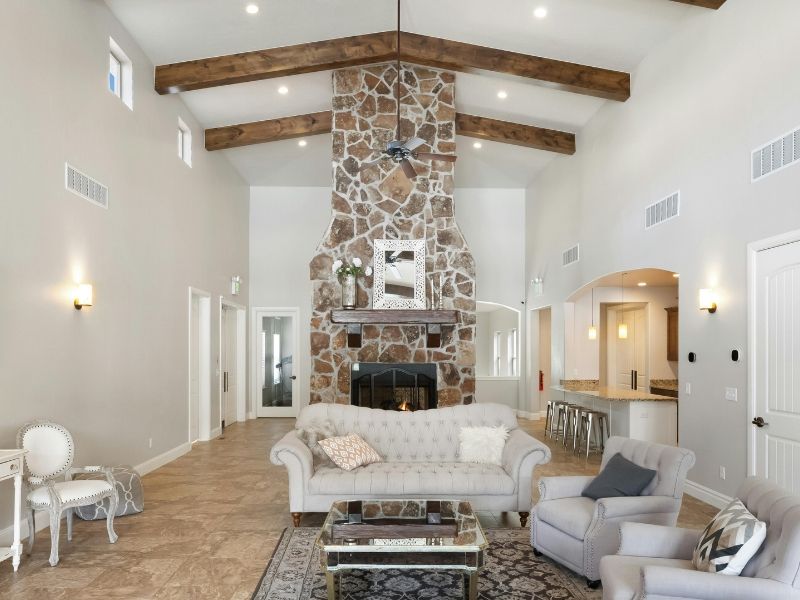
The catch is that veneer is only as good as what’s behind it, and a masonry contractor knows how to check, prepare, and finish that surface so the new stone stays put and stays safe near the fire. Dated brick, chipped tile, or a plain drywall surround can make a whole living room feel tired. Stone veneer changes that fast. It adds texture, weight, and a natural look without rebuilding the fireplace itself.
This guide is for homeowners planning a fireplace update, plus interior designers and remodelers coordinating the work. Stone veneer is a thin layer of natural or manufactured stone applied over an existing wall or fireplace face. It looks like full stone masonry but weighs far less. Getting the prep, layout, and clearances right decides whether the makeover lasts decades or starts cracking in a few seasons.
Assessing the Existing Fireplace Before Installing Stone Veneer
Every makeover starts with an inspection. The contractor looks at the fireplace type, the surface material, and the condition of the structure underneath. A masonry fireplace built with brick and a firebox is very different from a factory-built unit framed into a wall. Each one has different rules for what can be added to its face.
Condition matters too. Cracked brick, loose mortar, gaps around the firebox, or signs of heat damage need attention before veneer goes on. Covering those problems hides them without fixing them. A good contractor will also check the hearth, mantel, and nearby framing.
Here are items worth reviewing before work begins:
- Whether the fireplace is masonry-built or a factory-built unit
- The surface material, such as brick, tile, paint, or drywall
- Cracks, loose units, or damaged mortar around the firebox
- The hearth’s condition and how it meets the floor
- Mantel location and the materials it’s made from
If the fireplace has gaps, damage, or venting concerns, schedule any needed repairs or a chimney inspection before planning the new face.
Choosing Stone Veneer Materials for Fireplace Surrounds
Stone veneer comes in two main types. Natural thin stone veneer is real stone cut into thin pieces, which gives true color variation and texture. Manufactured stone veneer is cast from concrete and pigments to look like stone, and it’s usually lighter and more uniform. Each option can look great, depending on the style you want and your budget.
Style matters as much as material. Stacked stone gives a clean, modern look with tight, horizontal lines. Fieldstone or rubble patterns feel rustic and more irregular. Ledgestone, river rock, and cut limestone all create different moods in a room.
Heat exposure should guide your choice. Some veneer products have limits on how close they can sit to the firebox opening. Check the manufacturer’s guidance for any product you’re considering. If your home already has stone masonry outside, such as an outdoor fireplace or stone patio, matching it indoors can tie the spaces together.
How a Masonry Contractor Prepares Surfaces for Veneer Installation
Surface prep is where most veneer failures start or end. Veneer needs a clean, solid base it can bond to. Unpainted brick in good condition can sometimes take veneer directly after cleaning, but painted, sealed, or glossy surfaces usually can’t. Those surfaces often need the coating removed or a metal lath and mortar scratch coat installed first.
A scratch coat is a layer of mortar troweled onto the wall and scored with grooves. Those grooves give the veneer mortar something to grip. Over framed walls or drywall, the contractor may install cement board or lath to create a proper base. The right method depends on the existing surface, the veneer product, and its installation instructions.
Weight is another factor. Even thin veneer adds load to a wall. Natural stone weighs more than manufactured stone, and full-thickness stone may need extra support. Your contractor can confirm whether the wall and floor can handle the added weight.
Managing Stone Placement, Joints, and Fireplace Edge Details
Good placement makes veneer look like real stone masonry instead of a stick-on panel. Masons often lay out pieces on the floor first to balance colors, sizes, and shapes. They avoid stacking similar pieces together or lining up joints in obvious patterns. That planning takes time, but it shows in the finished wall.
Joints come in two main styles. Grouted joints fill the spaces between stones with mortar, which highlights the shape of each piece. Dry-stack installs fit the stones tightly with little visible mortar for a cleaner look. Ask to see examples of both before choosing.
Edges need special attention. Corner pieces wrap outside edges so the stone looks thick and solid. The firebox opening, mantel, and hearth all need clean transitions. Poor edge details are one of the fastest ways to make veneer look fake.
Ensuring Proper Clearances and Long-Term Veneer Performance
Stone itself doesn’t burn, but mantels, trim, and framing around the fireplace can. Building codes and fireplace manufacturers set clearances between the firebox opening and combustible materials. Factory-built fireplaces often have strict rules about what can cover their face and how close it can be. Follow those requirements, and confirm them with your contractor before finalizing the design.
Long-term performance depends on prep, materials, and use. Veneer that’s well bonded and installed within its heat limits should hold up for many years. Watch for loose stones, cracked joints, or discoloration near the firebox. Small issues are easier to repair early than after pieces start falling.
Cleaning is simple in most cases. Dust with a soft brush, and avoid harsh chemicals that can stain stone or mortar. Ask whether your veneer needs sealing, especially near the hearth where soot builds up. Regular care keeps the fireplace looking sharp.
Frequently Asked Questions
Can stone veneer go over existing brick?
Often, yes, if the brick is sound, clean, and unpainted. Painted or sealed brick usually needs extra prep, such as lath and a scratch coat. Loose or damaged brick should be repaired first. Your contractor will check the surface before recommending a method.
Is natural or manufactured stone veneer better for a fireplace?
Neither is better in every case. Natural stone offers true texture and color variation, while manufactured stone is lighter and more uniform. Heat limits, budget, and design style all play a role. Ask to see samples and review the product’s fireplace guidance.
Can I put stone veneer on a prefab fireplace?
Some factory-built fireplaces allow stone veneer on their face, while others have strict limits. The manufacturer’s installation manual usually spells out what’s allowed. Ignoring those rules can create safety and warranty problems. Check the manual before planning the makeover.
