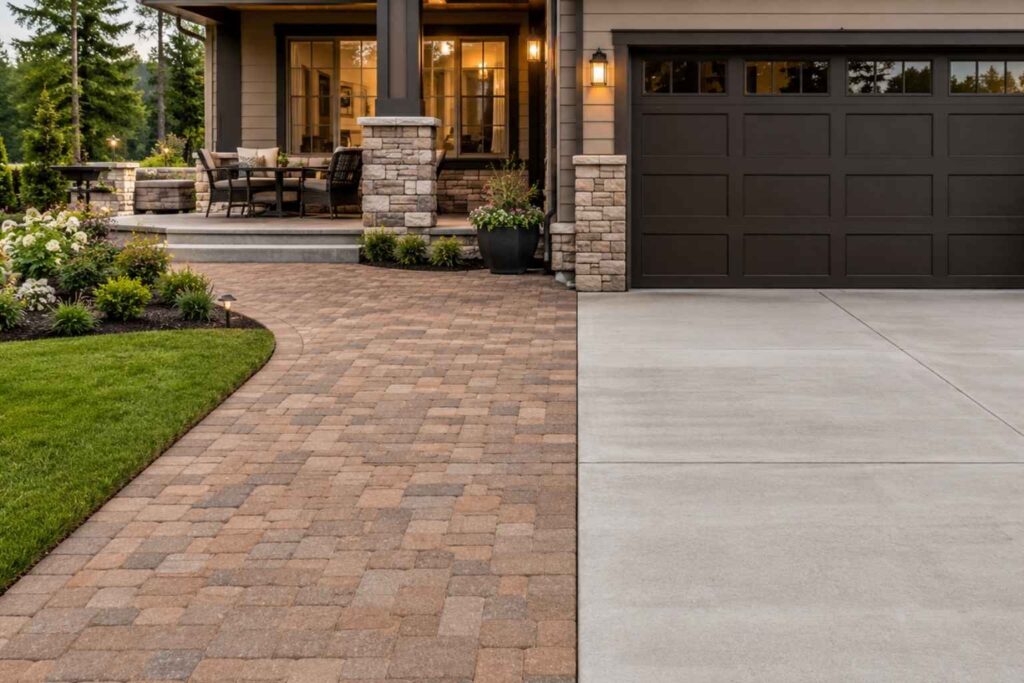
Choosing between brick pavers and concrete feels simple. Then the first crack shows up. Brick pavers and poured concrete handle weather, movement, and wear in very different ways. That difference shows up years after installation, not on day one. For developers, picking the wrong surface for the site can mean costly repairs long before the warranty ends.
This article breaks down how these two materials differ. It covers stability, drainage, repair, and installation. This way, the choice comes down to facts instead of guesswork.
How Material Structure Impacts Long-Term Surface Movement and Stability
Concrete and brick pavers move in different ways. That’s because they’re built in different ways.
Concrete gets poured as one continuous slab. That single structure has to absorb every bit of ground movement across its whole surface. When soil shifts underneath, concrete has nowhere to flex. It cracks.
Brick pavers are separate units set in sand over a packed base. That structure changes how movement gets handled:
- Each paver can shift a little on its own without affecting the ones next to it.
- Small soil movements spread out across many joints instead of piling up in one spot.
- A cracked or sunken paver can get lifted and reset without touching the rest of the surface.
- The whole system stays flexible even as the ground beneath it settles over time.
McKinney has clay soil. This soil expands and shrinks as moisture changes through the year. That kind of shifting ground tends to be much harder on a single concrete slab than on a jointed paver system.
Why Expansion and Contraction Behave Differently in Brick and Concrete
Temperature swings make materials expand and shrink. How each material handles that swing decides whether it cracks or holds up.
Concrete expands and shrinks as one solid piece. Without control joints placed the right way, that movement creates stress points. Those stress points turn into cracks. Even with joints, concrete can still crack in random spots if the joints aren’t spaced right for the slab size.
Brick pavers expand and shrink at the joint level instead of across the whole surface:
- Sand-filled joints between pavers leave small, natural gaps for movement.
- No single paver carries the full stress of a temperature swing.
- Polymeric sand in the joints stays flexible enough to handle seasonal changes without failing.
This difference matters most in places with hot summers and the odd winter freeze. That’s a common pattern across North Texas.
Drainage Performance Differences Between Paver Systems and Solid Slabs
Water acts very differently on a paver surface compared to a solid concrete slab.
A concrete slab blocks water completely. Water has nowhere to go except across the surface toward a drain or the edge of the slab. If the slope is even a little off, water pools right there.
A paver system handles water in a different way:
- Joint sand lets some rainwater filter down into the base layer instead of running off completely.
- A properly built gravel base beneath the pavers keeps that drainage path going deeper into the ground.
- Less water runoff means less strain on nearby drainage systems during heavy rain.
- Pooling happens less, even on a surface with a small slope, because some water drains straight down instead of only sideways.
Solid concrete slabs depend completely on surface grading to manage water. Get that grading wrong, and there’s no backup drainage path to help.
Repair Flexibility: Why Brick Pavers Are Easier to Maintain Than Concrete
Repairs show the biggest difference between these two materials.
Concrete repair options are limited:
- Cracks can get filled, but the repair usually shows and doesn’t bring back full strength.
- A damaged section often needs cutting out and repouring. This rarely matches the color or texture of the rest of the slab.
- Full slab replacement is sometimes the only real fix for serious damage.
Brick paver repair works in a different way:
- Damaged pavers can get pulled out and replaced one at a time, without disturbing the rest of the surface.
- Sunken spots can get lifted, the base fixed, and the pavers set back in place.
- Repairs blend into the surface much better, since the material and pattern already match.
For a property that needs to stay in good shape for many years, this repair flexibility often matters more than a small difference in upfront cost.
How Installation Methods Influence Lifespan and Surface Failure Risk
Both materials can last decades. Both can also fail early if installed poorly.
Concrete lifespan depends a lot on:
- Proper base prep and packing before the pour.
- The right concrete mix for the local climate and expected load.
- Control joints placed at the right spacing to manage cracking.
Brick paver lifespan depends on:
- A properly packed gravel base, usually four to six inches deep.
- A leveling layer of coarse sand under the pavers.
- Edge restraints that keep the outer pavers from shifting outward over time.
Both systems fail early when installers skip base prep to save time. The difference is that a failing paver system is usually easier and cheaper to fix than a failing concrete slab.
Frequently Asked Questions
Which lasts longer, brick pavers or concrete?
Both brick pavers and concrete can last several decades when properly installed. However, brick pavers often perform better in areas with shifting or expansive soil conditions.
Is concrete cheaper than brick pavers?
Concrete usually has a lower upfront cost. However, brick pavers can offset that difference over time due to lower repair costs and easier long-term maintenance.
Can cracked concrete be repaired to look like new?
Not usually. Concrete repairs are often visible because it is difficult to perfectly match the original color and texture once the slab has cured and aged.
Do brick pavers require more maintenance than concrete?
Brick pavers may require occasional joint sand refilling, but they generally need less major repair work over time compared to concrete surfaces.
Which option handles heavy rain better?
Brick paver systems typically handle heavy rain more effectively because joint sand and the gravel base allow some water infiltration instead of relying solely on surface runoff.
