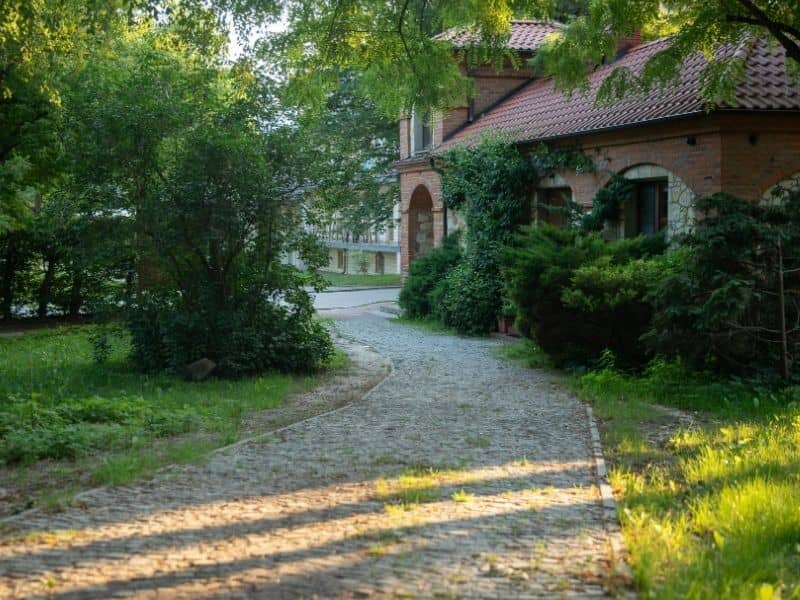
Good landscape design can make brick and stone look like they belong. A front yard with new plants around an older brick porch can feel calm or feel busy. The difference often comes down to how the plants sit next to the masonry. This guide shows how to plan planting around walls, steps and entry features so the whole exterior reads as one look.
Start With the Yard’s Existing Visual Lines
Your home already has strong lines. The front door, the front walk, the foundation edge and any brick or stone you own all set a pattern. Plan your planting around those lines before you pick a single plant.
Walk out to the street and look back at the house. Notice where your eye lands first. That spot is usually the entry or a stone feature near the door. Good landscape design points the eye toward those spots, not away from them.
Then check the other views. Look from the driveway. Look from the front walk. Look out the main windows where you sit each day. Plants that line up with the walkway or match the angle of a low wall make the yard feel planned. Plants dropped in at random fight the lines the house already has.
Keep your focus on where each plant goes, not on the brick or stone itself. The masonry is already in place. Your job is to set greenery so it agrees with it.
Give Plants Enough Room to Frame Masonry, Not Hide It
A plant’s size on planting day is not its real size. Most shrubs, grasses and small trees grow wider and taller over a few years. Give them room now so they frame your brick or stone later, not bury it.
Read the plant tag before you dig. It lists a mature width and height. Set the plant so its grown size still leaves the wall, step or column in view. A stone column looks best with a little space around it. Plants pressed right against it hide the very feature you paid for.
Framing and covering give two different results. A framed feature has plants on the sides or below that lead the eye to it. A covered feature vanishes behind leaves. Aim to frame. Leave the face of a wall or the front of an entry feature open.
Think about the years ahead too. A young bed can look bare at first. Owners often crowd plants to fill that gap. Two seasons later the same bed hides the steps and blocks the path. Room for growth now saves a lot of pruning and moving later.
Use Repetition to Connect Separate Outdoor Areas
Repeating a few plant shapes or textures across the yard ties it together. This is a quieter design trick, and many owners skip it. Pick one or two plants and use them in more than one spot.
Say you have a rounded shrub near the front steps. Plant the same shrub near the side gate and again by the back patio. Your eye follows that shape from area to area. The whole property starts to feel like one design instead of three separate projects.
Do not repeat everything, though. If every bed uses the same plants in the same order, the yard turns flat and dull. Repeat a form or a texture, then let each area keep its own extras. That balance stays connected but still holds interest.
Keep repeating to plants here. The goal is a planting rhythm that carries across the yard. Your brick and stone already have their own pattern, so let the greenery handle this part.
Balance Hard Edges With Softer Plant Forms
Brick and stone have sharp, straight edges. Those edges look strong, which is good. Next to soft plants, they look even better, because the contrast reads on purpose.
A few plant forms work well for softening a hard edge:
- Low mounding shrubs that spill over a wall base
- Ornamental grasses that sway beside a straight column
- Groundcovers that creep up to the edge of a step
- Spreading perennials that break up a long, flat border
Use plant height and shape to build a gentle step-down. A tall grass, then a mid-size shrub, then a low groundcover eases the eye from a wall down to the lawn. That slope of heights feels natural. A wall that meets bare grass with nothing in between looks abrupt.
Aim for balance, not a list of perfect plants. Any plant with a rounded or loose shape can soften a firm masonry line. The look you want is calm, where the hard and soft parts share the space.
Plan the Landscape for How It Will Look After Several Growing Seasons
A fresh planting bed and a grown one look very different. Good landscape design plans for the grown version. Picture the yard three or four seasons out, not just the day the last plant goes in.
Growth changes the view in ways that are easy to miss. A shrub doubles in width. A vine climbs past a stone accent. A small tree threw shade where there was sun. Plants also shift by season, full in spring and bare in winter, so the same bed can frame a wall in June and open it up in January.
Think about pruning before you plant. Some plants need a trim twice a year to stay in bounds. If you would rather skip that chore, choose slower or smaller plants near your masonry. Watch the spots where growth could cover a detail you like, such as a stone address block or a nice course of brick at the entry.
A yard that looks perfect on install day can feel crowded by its second summer. Plants that framed the porch now hide it. The walk feels narrow. The fix is to plan for grown size from the start.
For homeowners updating a front yard, this last step matters most. Our clay soil and warm summers push growth fast, and McKinney sits in USDA zone 8b, so many plants keep going for much of the year. Plan your landscape design around the grown size of each plant, and your masonry and greenery will still read as one clean look many seasons from now.
