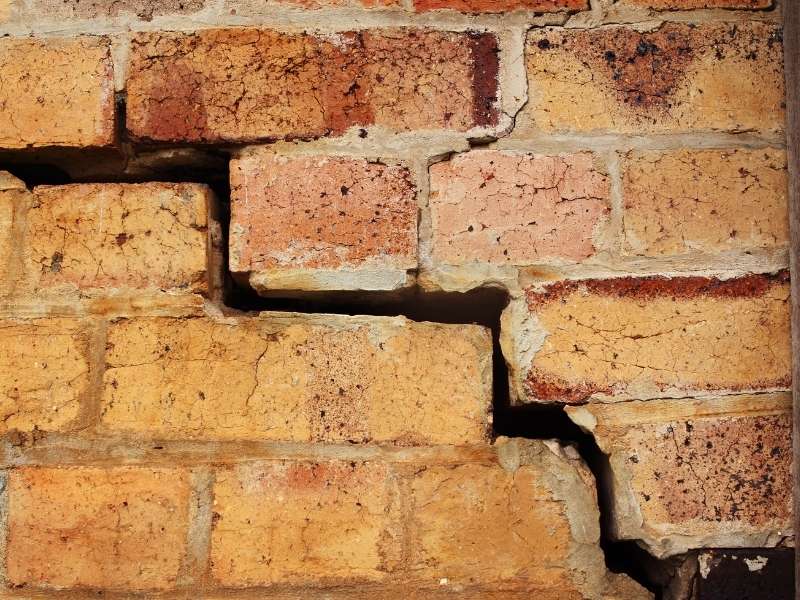
Spalled brick usually shows up as small chips and flakes on the ground at the base of a wall. Look up, and you’ll see brick faces that have popped off, leaving rough, crumbly patches behind. Garden walls are especially exposed, since rain, sprinklers, and soil can soak them from several sides at once. Good brick repair starts by finding why the brick spalled, then fixing the damage in a way that keeps it from coming right back.
Identifying Spalling Patterns on Garden Wall Brickwork
Spalling happens when the outer face of a brick breaks away. It can look like flaking, peeling, pitting, or chunks missing from the surface. Once the hard outer face is gone, the softer inside of the brick wears faster.
Where the damage shows up tells you a lot. Spalling near the bottom of a wall often points to soil contact, splashback, or sprinklers. Damage along the top usually means water is getting in through the cap. Scattered spalling across the face can point to a batch of weaker brick or past cleaning damage.
Walk the whole wall before planning repairs. Note which side is worse, how far up the damage goes, and whether mortar joints look damaged too. Photos of each section help you and your brick mason compare conditions.
- Damage concentrated in the lowest few courses
- Spalling along the top of the wall below the cap
- Damage around downspouts, faucets, or sprinkler heads
- Random spalled bricks spread across the wall
- Spalling next to hard, gray, overly thick mortar joints
Evaluating Moisture Exposure and Deteriorated Brick Surfaces
Moisture is behind most spalling. Brick absorbs water, and when that water freezes, expands, or carries salts to the surface, it can push the face off. Garden walls get wet from rain, irrigation, and soil, and they often dry slowly in shaded spots.
Look for the water source. Missing or cracked caps, soil piled against the wall, sprinkler spray, and poor drainage are common causes. A wall that holds back soil, like a short retaining wall, may also have water building up behind it.
Past treatments can make things worse. Pressure washing or sandblasting can strip the brick’s protective face. Some sealers trap moisture inside the brick instead of keeping it out. Tell your mason about any past cleaning or coatings so they can factor that in.
Choosing Between Individual Brick Replacement and Localized Repairs
Not every spalled brick needs the same fix. Badly damaged bricks are usually cut out and replaced. Bricks with light surface damage may be left alone or repaired in place, depending on how they look and how much face is left.
Replacing a brick means cutting out the surrounding mortar, removing the damaged unit, and setting a new brick in fresh mortar. It’s the most durable option when spalling runs deep. Done carefully, it doesn’t disturb the neighboring brick.
Patching with repair mortar can work for small, shallow areas. It’s often less durable than replacement and may not match well over time. Your mason can explain which bricks need replacement, which can be patched, and which are best monitored for now.
Matching Replacement Bricks and Mortar to Existing Garden Walls
A good brick repair blends in. Replacement bricks should match the size, color, and texture of the originals as closely as possible. Older walls can be hard to match, so salvaged brick or careful selection from a supplier may be needed.
Mortar matters as much as brick. Mortar that’s too hard can force movement and moisture into the brick instead of the joints, which can lead to more spalling. New mortar should be compatible with the existing brick and mortar, especially on older walls.
Color and joint style should match, too. Ask your mason to mix a sample and let it dry before full repairs begin. Matching the original joint profile, whether flush, concave, or raked, helps the repair disappear into the wall.
Protecting Repaired Brick Faces Through Proper Drainage and Maintenance
Repairs won’t last if the water problem stays. Start at the top of the wall. A cap or coping with a slight overhang and a drip edge sheds water away from the brick faces below.
Next, look at the base. Pull soil and mulch away from the wall so the bricks can dry out. Adjust sprinklers so they water plants, not brick. If the wall holds back soil, check that weep holes or drainage openings are clear.
Keep up with yearly checks. Look for new flaking, cracked joints, and damaged caps after wet seasons. Avoid harsh cleaning methods, and ask your mason before applying any sealer, since the wrong product can trap moisture and speed up spalling.
Frequently Asked Questions
What causes brick to spall on garden walls?
Spalling is usually caused by moisture getting into the brick. Water can freeze, expand, or carry salts that push the brick face off. Garden walls are exposed to rain, irrigation, and soil from several sides. Hard mortar and harsh cleaning can also contribute.
Can spalled brick be repaired without replacing it?
Light surface damage can sometimes be patched or left alone. Deeper spalling usually calls for brick replacement. Patches tend to be less durable than new brick. A mason can tell you which approach fits each brick.
Will new bricks match my old garden wall?
A close match is often possible with salvaged or carefully selected brick. Exact matches can be hard on older walls. Mortar color and joint style help repairs blend in. Ask for a sample before full repairs begin.
