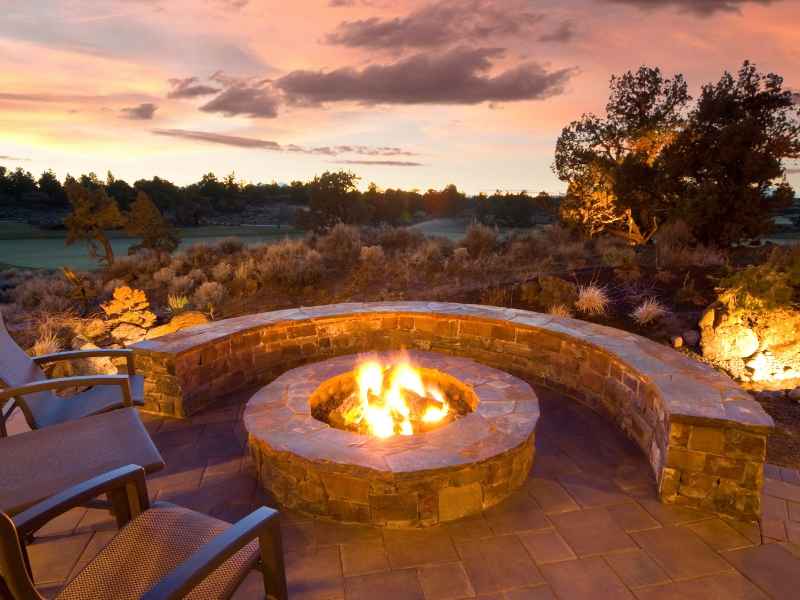
A ring of stone pavers gives the fire a level, defined home and turns it into a real gathering spot. A fire pit gets used a lot more when there’s a good place to sit around it. Drop one in the middle of the lawn and chairs sink, ash tracks into the house, and the grass around it dies.
This guide is for homeowners planning a new fire pit circle or upgrading an existing one. The main takeaway is to size the circle for seating first, choose stone that handles both heat and foot traffic, and build the base and drainage before worrying about the pattern. Local fire rules, HOA guidelines, and product instructions can affect placement, so check them before you mark the ground.
Planning the Diameter and Seating Layout of a Fire Pit Circle
Start with the fire pit size, then work outward to the seats. The pit, a ring of open space around it, and room for chairs to slide back all need to fit inside the paved area. Many backyard circles land somewhere around 12 to 16 feet across, but the right size comes from how many people you seat and the chairs you use.
Decide early between movable chairs and built-in seating. Movable chairs need extra paving behind them so legs don’t drop off the edge. A curved seat wall, often built with stone masonry or brick masonry to match the house, can hold the circle’s edge and save space.
Placement matters too. Keep the circle a safe distance from the house, trees, fences, and overhangs, following local rules and manufacturer guidance. Think about the prevailing wind, the view from the back door, and how a path will connect the circle to your stone patio or outdoor kitchen.
Choosing Stone Pavers for Outdoor Gathering Areas
Natural stone gives a fire pit area a settled, built-in look. Common choices include flagstone, bluestone, limestone, sandstone, and travertine, each with a different color, texture, and price. The best choice comes down to appearance, foot traffic, maintenance, and how well the stone matches existing masonry on the property.
Some traits matter more around a fire than on a typical patio. Check these before you buy. Ask your supplier for straight answers on each:
- Surface texture that stays grippy when wet
- Thickness and density, since thicker, denser pieces resist cracking
- Color, because dark stone gets very hot in direct sun
- Porosity, which affects staining from ash, soot, and spilled drinks
Brick pavers are a solid alternative, especially next to a brick home or an existing brick patio. Clay brick holds up well to heat and comes in uniform sizes that make circular patterns easier to lay. Neither material is right for every yard, so compare samples in your own light before choosing.
Creating Circular Stone Pavers Patterns Around a Central Fire Pit
Circular patterns make a fire pit area feel intentional. The simplest approach uses a circle kit, which is a set of pre-cut, tapered pavers designed to form rings around a center point. Kits are more common with manufactured pavers, though some stone suppliers offer them.
With cut stone, the installer usually builds rings outward from the pit and trims pieces to keep joints even as the circle grows. Irregular flagstone gives a looser, puzzle-like look with less cutting, and it suits rustic yards. A border ring of contrasting stone or brick frames the circle and helps hold the edge.
Plan how the circle meets everything around it. A round pad next to a square patio needs a clean transition, such as a shared border or a short connecting path. Ask to see a layout drawing before cutting starts, since stone is expensive to waste.
Preparing the Ground and Installing Stone Pavers on a Stable Base
The base keeps the circle level for years. The installer marks the center, excavates to firm soil, and installs a compacted layer of crushed aggregate. A sand bedding layer goes on top for a dry-laid installation, and curved edge restraints keep the outer ring from spreading.
Some flagstone circles are mortar-set on a concrete slab instead. That approach suits thin or irregular stone that would rock on sand, but it needs a sound slab with planned joints. Base depth and method depend on soil conditions, drainage, stone type, and use, so ask your contractor to explain why they chose one approach over the other.
Build the fire pit’s footing as part of the same plan. A masonry fire pit needs a stable base of its own so it doesn’t settle differently from the pavers around it. Many pits also include a drain hole or gravel bottom so rain doesn’t pool inside.
Managing Heat Exposure, Drainage, and Long-Term Paver Maintenance
Heat is the biggest difference between a fire pit circle and an ordinary patio. Stone right at the edge of a fire can discolor, crack, or flake, and some stones handle heat better than others. A ring of firebrick or a heat-resistant cap between the fire and the pavers keeps the hottest zone off the walking surface.
The pit itself should be lined with firebrick or a steel insert made for the type of fire you’ll burn. Gas fire pits have their own installation requirements, so follow the manufacturer’s instructions and local rules for gas lines. Never use river rock or other water-holding stones inside the fire area, since trapped moisture can make them crack or pop.
Drainage protects both the pavers and the pit. Slope the circle slightly so water runs off the outer edge instead of collecting at the center. Check that surrounding lawn or planting beds don’t drain back onto the paving.
Maintenance is simple but regular. Sweep ash and debris off the stone after use, clean soot stains before they set, and refill joint sand when it drops. Reset any stones that settle, and inspect the pit lining each season for cracks.
Frequently Asked Questions
How big should a stone pavers fire pit seating circle be?
Size comes from the pit diameter, the number of seats, and whether the seating is movable or built in. Many backyard circles fall between about 12 and 16 feet across. Leave enough room for chairs to slide back without dropping off the edge. A masonry contractor can mark the layout on the ground so you can test it with real chairs.
Can stone pavers go right up to the fire pit?
Pavers can surround the pit, but the stones closest to the fire take the most heat. Many installers use a ring of firebrick or a dense cap stone as a buffer. That protects the walking surface from discoloring and cracking. Ask your contractor which stones in your design will see direct heat.
Is flagstone or brick better around a fire pit?
Neither is better for every yard. Flagstone gives a natural, rustic look, while brick offers uniform sizes and handles heat well. Your choice can come down to the look of the home, existing masonry, budget, and maintenance. Seeing samples next to your house helps narrow it down.
