
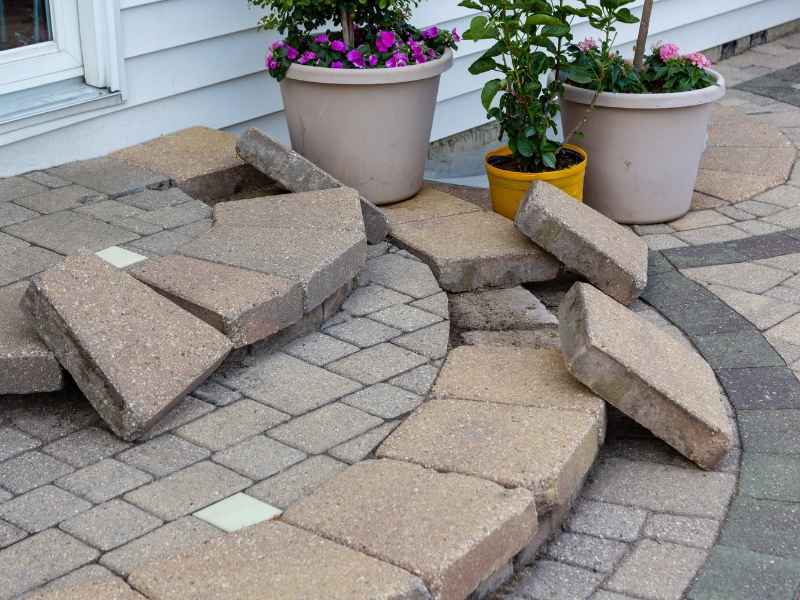
A qualified masonry contractor can find out why the bricks came loose and fix that cause, so you aren’t regluing the same bricks every spring. Front porches take more abuse than almost any other masonry on a home. They carry foot traffic every day, sit in the rain, and often hold water right at the front door.
A loose brick on the front porch starts as a small annoyance. It rocks a little when you step on it, or you notice a gap where the mortar used to be. Within a season or two, that one brick turns into three, and the edge of a step starts to feel unsafe.
What Causes Bricks to Become Loose on Front Porches
Most loose porch bricks trace back to water. Rain soaks into cracked mortar joints and gets trapped under the bricks. Over time, that moisture breaks the bond between the brick and the mortar bed below.
Freeze and thaw cycles make things worse in colder months. Water expands when it freezes, pushing bricks up and widening gaps. Each cycle loosens the bond a little more.
Other common causes include:
- Settling or cracking in the concrete slab under the porch
- Soil movement from wet and dry seasons
- Porches built without enough slope to shed water
- Weak or poorly mixed mortar from the original build
- Deicing salts that eat away at brick and mortar
- Gutters or downspouts dumping water onto the porch
Often, it’s a mix of these problems. That’s why replacing a few bricks without checking what’s below rarely lasts.
How Masonry Contractors Assess Loose Bricks and Underlying Damage
A good repair begins with a careful inspection. A masonry contractor looks past the loose bricks to see what’s happening underneath and around them. The goal is to find the cause, not just the symptom.
Many contractors tap bricks with a tool or handle to listen for a hollow sound. A hollow tone often means the brick has lost its bond, even if it doesn’t move yet. Cracked or sandy mortar joints are also mapped to show how far the damage spreads.
The concrete slab under the brick needs to be solid and properly sloped. Large cracks, sunken areas, or a slope toward the house point to deeper problems. The contractor will also watch where water goes during rain or from downspouts.
Step edges and porch borders often loosen first. These bricks get kicked, stepped on, and hit by water from several sides. Damage here can also be a safety risk, so it’s usually a top repair priority.
Preparing Porch Surfaces for Proper Brick Repair
Preparation is where long-lasting repairs start. Loose bricks are lifted out carefully so they can be reused when possible. Reusing original bricks helps the repair match the rest of the porch.
Old mortar is removed from the bricks and the slab surface. New mortar won’t bond well to crumbly or dusty material. The mason cleans the area down to solid concrete.
Any slab problems get fixed before resetting begins. Cracks may be filled or repaired, and low spots may be built up to restore proper slope. If the slab has failed badly, a larger repair may be needed before any brick goes back down.
Professional Techniques for Resetting and Securing Loose Porch Bricks
Resetting bricks is about creating a full, strong bond. The mason lays a fresh mortar bed on the clean slab and sets each brick firmly into it. Bricks are leveled and checked so they sit flush with their neighbors.
Joint width and finish should match the existing porch. Mortar color matters too, since a mismatched joint stands out even when the brick is perfect. Good contractors mix test batches to compare color before finishing.
Edge bricks on steps and borders get extra attention. These pieces often need a stronger bond and careful tooling to shed water. Some porches benefit from a sloped edge detail that sends water off the step instead of into the joints.
Curing time is part of the process. Fresh mortar needs time to gain strength before heavy use. Your contractor will tell you how long to keep foot traffic light, which often depends on weather.
Maintaining Repaired Brick Porches for Long-Term Stability
A repaired porch can last many years with a little care. Most maintenance focuses on keeping water moving off the surface. Small habits go a long way.
Keep gutters clean and make sure downspouts drain away from the porch. Sweep off leaves and debris that hold moisture. In winter, avoid rock salt, which can damage brick and mortar, and use a masonry-safe ice melt or sand instead.
Check the porch once or twice a year for cracked joints or hollow-sounding bricks. Small repairs are quick and inexpensive. Waiting usually means more bricks come loose and the cost goes up.
Some homeowners choose to apply a breathable masonry sealer. A breathable product lets moisture escape instead of trapping it. Ask your contractor whether a sealer fits your brick type before applying one.
Frequently Asked Questions
Can I glue loose porch bricks back down myself?
Construction adhesive may hold a brick for a short time. It doesn’t fix cracked mortar, slab movement, or drainage problems. The brick often loosens again within a season. A proper repair resets the brick in mortar and addresses the cause.
Are loose porch bricks dangerous?
Yes, loose bricks can cause trips and falls, especially on steps. Edges that rock or shift are the biggest risk. The danger increases in wet or icy weather. It’s best to have them repaired as soon as you notice movement.
How much of my porch needs to be repaired?
That depends on how widespread the damage is. Sometimes only a few bricks need resetting. Other times, hollow bricks spread across the porch or the slab needs repair. An inspection by a masonry contractor will show the full scope.
