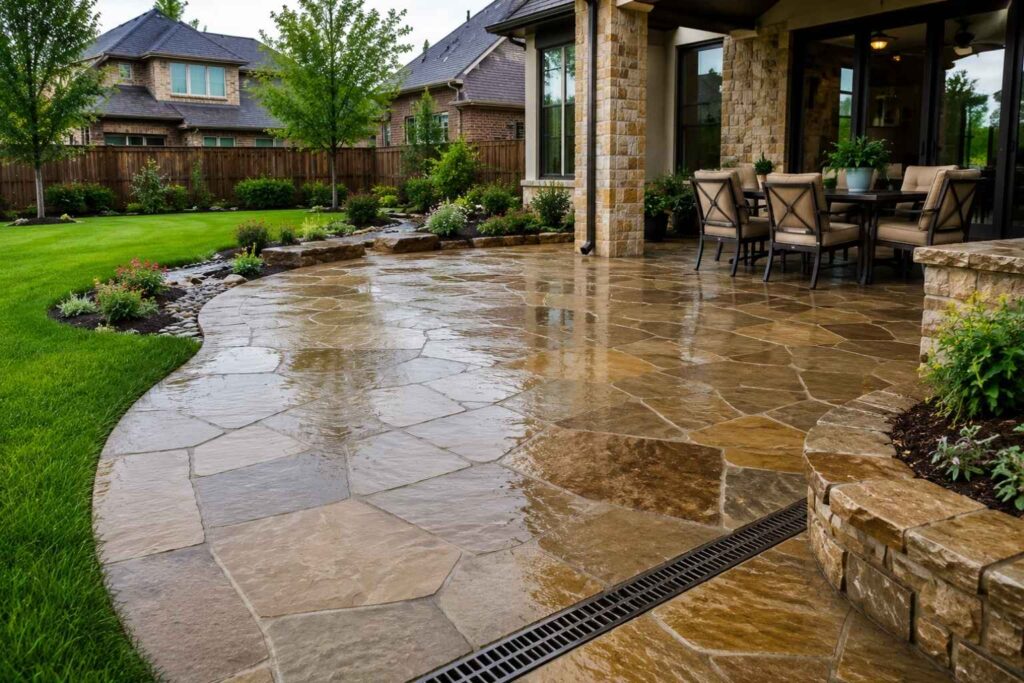
A patio isn’t just a place to put a table and chairs. It can fix or ruin how water moves across a yard. Stone patios, when built right, pull double duty. They give homeowners outdoor space and solve drainage problems at the same time. This matters more than it looks. Poor drainage under a patio can lead to foundation issues and soggy yards years down the road.
How Stone Patio Systems Redirect Water Flow Without Pooling Issues
Water needs somewhere to go. A well-built stone patio gives it a clear path instead of letting it sit and pool.
Here’s how a good patio system handles water flow:
- The patio surface slopes slightly away from the house, guiding water toward a safe drainage point.
- Joint spacing between stones lets some water pass through instead of running off in one direction.
- Edge restraints keep the stone base from shifting, which would otherwise create low spots where water collects.
- Drainage channels or French drains, when needed, catch excess water before it reaches the patio surface.
A flat patio with no slope is one of the most common causes of standing water. Even a small grade, often just a couple percent, makes a real difference over time.
The Hidden Role of Permeable Joints in Patio Drainage Performance
Most people focus on the stone. Few think about the joints between them. But those small gaps do a lot of work.
Permeable joints matter because:
- They let rainwater soak into the ground instead of running off across the whole yard at once.
- They reduce the load on nearby drainage systems during heavy storms.
- They lower the risk of ice buildup on the surface in colder months, since less water sits on top.
- They help the patio base stay properly hydrated, which can reduce shifting caused by dry, cracked soil underneath.
Joint material matters too. Polymeric sand, for example, hardens enough to resist weeds but still allows some water through. A fully sealed joint blocks drainage entirely and pushes more water onto the surrounding yard.
Why Proper Base Layers Matter More Than the Stone Surface Itself
The stone gets all the attention. The base underneath does most of the actual work.
A solid base includes:
- A compacted layer of crushed gravel, usually four to six inches deep, that allows water to drain through instead of pooling.
- A layer of coarse sand on top of the gravel, which helps level the stones and adds another draining layer.
- Proper compaction at each stage, since loose material settles unevenly and creates dips over time.
- A geotextile fabric layer in some cases, which keeps soil from mixing into the gravel base and clogging its drainage ability.
Skipping any of these layers, or rushing the compaction process, tends to show up within a year or two as uneven settling. Once that happens, low spots start collecting water no matter how well the stone itself was laid.
How Stone Patios Reduce Soil Erosion During Heavy Rainfall Events
Bare soil erodes fast during heavy rain. A properly installed stone patio slows that process down significantly.
Ways a stone patio helps control erosion:
- It covers exposed soil, reducing the direct impact of heavy rainfall hitting bare ground.
- It slows water velocity as it moves across the surface, compared to water rushing over open dirt.
- It directs water to designated drainage points instead of letting it carve random paths through a yard.
- It reduces mud and sediment runoff into nearby storm drains or neighboring properties.
McKinney sees heavy, fast-moving storms during parts of the year. A patio system designed with erosion control in mind holds up far better than a flat concrete slab with no drainage planning behind it.
The Connection Between Patio Grading and Long-Term Yard Stability
Grading isn’t just about the patio. It affects the whole yard around it.
Here’s why grading matters long term:
- Water directed away from a patio still has to go somewhere, so overall yard grading needs to account for that flow.
- Poor grading near a patio can undermine soil stability, leading to settling or shifting years after installation.
- Consistent grading across the yard prevents new low spots from forming once the patio changes how water naturally moves.
- Proper grading protects nearby foundations by keeping water from pooling too close to the house.
A patio built without considering the yard’s overall grade often just moves the drainage problem somewhere else instead of actually solving it.
Frequently Asked Questions
Can a stone patio actually prevent yard flooding?
A well-designed stone patio with proper grading and permeable joints can significantly reduce standing water, though severe drainage issues may still require additional solutions such as French drains.
How much slope does a patio need for proper drainage?
Most patios require a slope of about one to two percent away from the structure. This is enough to move water effectively without creating a noticeable incline underfoot.
Do permeable joints require more maintenance than sealed surfaces?
Permeable joints may need occasional replenishment with polymeric sand over time, but they generally help reduce broader drainage issues, which can offset the maintenance requirement.
What happens if the base layer is not properly compacted?
Poor compaction often leads to uneven settling within one to two years, creating low spots where water can collect on the patio surface.
Is a stone patio a good solution for yards with erosion problems?
Yes. When properly designed with grading and drainage in mind, stone patios can help reduce erosion by protecting exposed soil and guiding water flow.
