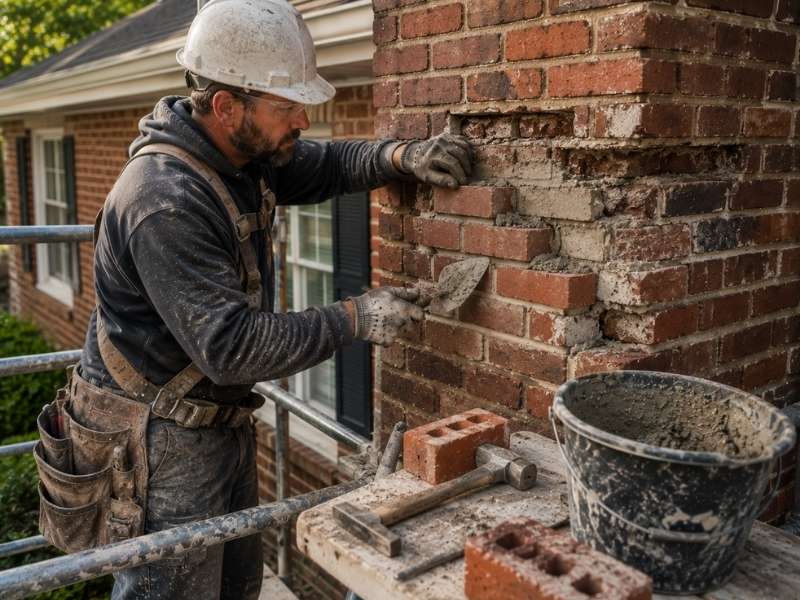
How Stone Pavers Improve Outdoor Living Spaces
Everybody compares stone pavers to the other pavers. Almost nobody compares them to the thing they’re actually replacing, which is a slab of poured concrete with a broom finish. That’s the real decision on most projects, and it gets made on price in about four minutes. Ten years later, one of those two surfaces still looks like something and the other one has a crack running corner to corner.
The crack question settles it
Poured concrete is one rigid piece. Soil moves underneath it, and a rigid piece that can’t move cracks instead. Control joints help by telling the crack where to go, and they don’t stop it from happening.
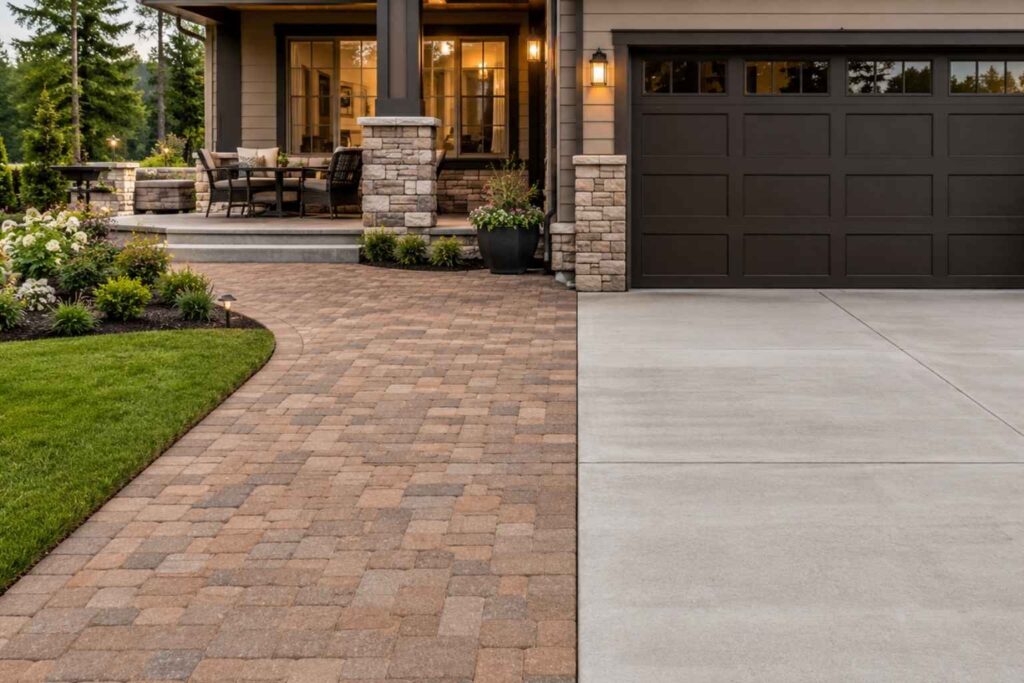
Pavers are hundreds of separate pieces with sand between them. The same soil movement travels through the joints, and the surface flexes rather than breaking. A settled area shows up as a dip you can lift and reset in an afternoon.
That’s the argument in one paragraph. Every other advantage below is downstream of it.
Repair is the thing nobody prices
A cracked slab has two options. Live with it, or demolish and repour the whole thing, which means new concrete that won’t match anything nearby.
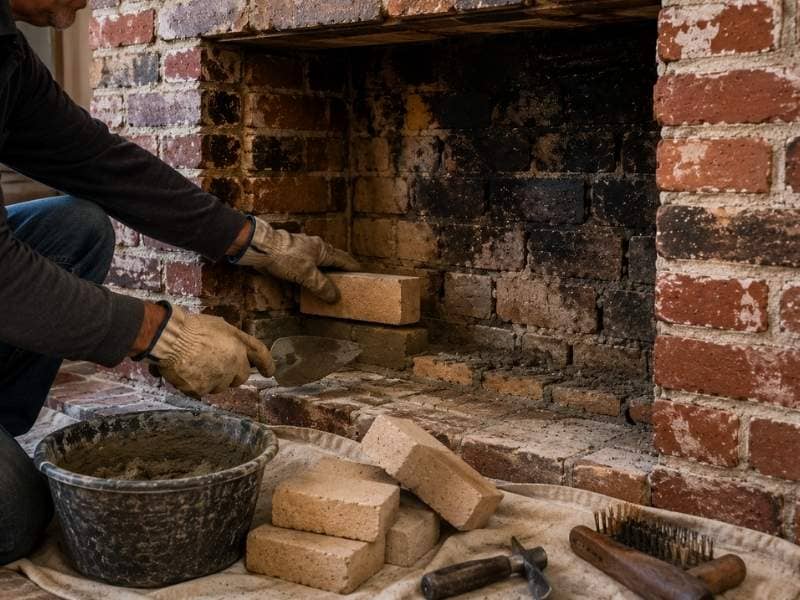
A damaged paver area has a third option. Pull the affected units, fix what’s underneath, put them back. Nobody can tell it happened, provided you kept extra units from the original run.
That flexibility matters more over time than any style choice. Utilities get trenched. Tree roots arrive. A hot tub shows up in year six and needs a bigger base. All of those are ugly on a slab and routine with pavers.
Water has somewhere to go
A slab sheds every drop of rain to its edges. That water concentrates and heads somewhere, often toward the house or across a neighbor’s yard.
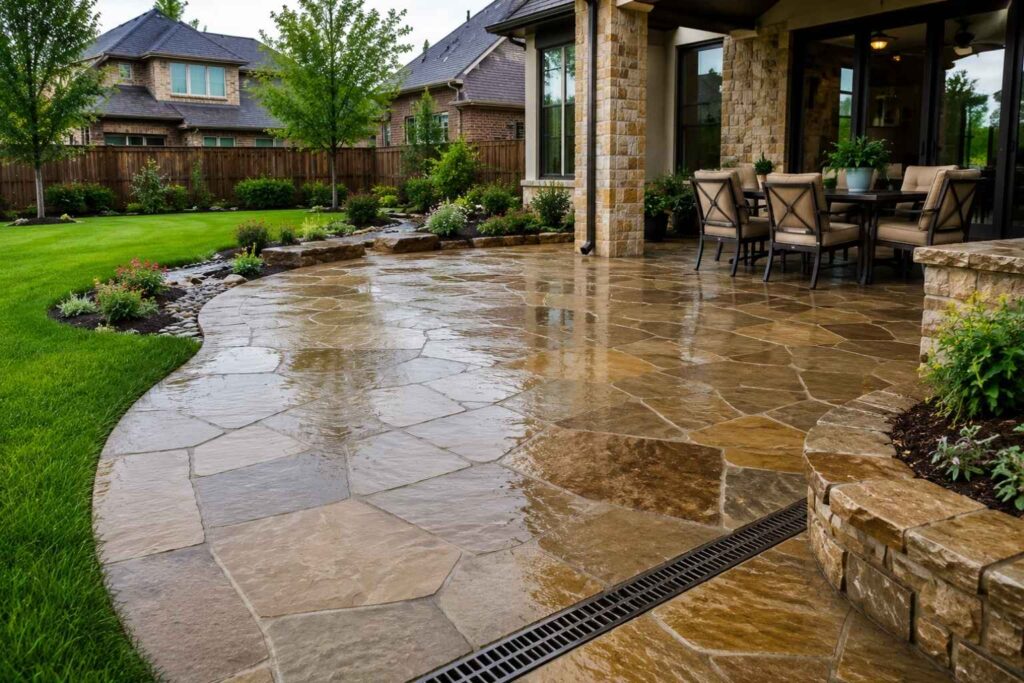
A paver surface has joints, and some water moves through them into the base. Permeable systems take that further with open-graded aggregate designed to hold and infiltrate stormwater. Some jurisdictions give credit for permeable paving in their drainage calculations, so it’s worth asking your building department.
Don’t oversell this to yourself. Standard pavers with polymeric sand shed most water like any hard surface does. The permeable version is a different product with a different base, and it costs more.
Comfort you can feel
Surface temperature is a real difference and it’s rarely mentioned. Light colored stone runs cooler underfoot than dark concrete in direct sun, and that’s the difference between a patio people use in July and one they look at through the window.
Texture matters at the same level. A wire-cut or textured paver holds traction when wet, and a smooth troweled slab gets slick. Around a pool or on any slope, that’s a safety issue and not an aesthetic one.
Glare is the third one. A big pale slab throws light back into the house all afternoon. Broken up into units with joints, the same area reads softer.
Where a slab still wins
Price, on day one. A broom finish slab is cheaper per square foot than any real stone paver, and if the budget stops at the number, the slab wins and that’s a legitimate call.
Speed is the other one. Pour, finish, wait, done. A paver installation is slower because it’s a hand-set process, and on a large area the labor difference is significant.
Under a permanent structure, a slab often makes more sense. A garage floor, a shed pad or a foundation isn’t a place for pavers. Match the surface to the job instead of picking a favorite.
And where a deck wins
Wood and composite decking beats pavers wherever you’re more than a step or two above grade. Building a paver terrace on fill to reach a raised door is expensive and it settles.
Decking also spans over slopes, and a paver surface has to be built up to meet them. On a steep lot, that’s the whole ballgame.
What actually improves the space
Level changes do more for an outdoor area than material choice. A single step between two paved areas defines them as separate rooms, and stone units handle that transition cleanly with a solid cap.
Edges are the other one. A paver surface needs a restraint at every open edge or it spreads outward over years. Restraint done right disappears. Done wrong or skipped, it’s the first thing that fails.
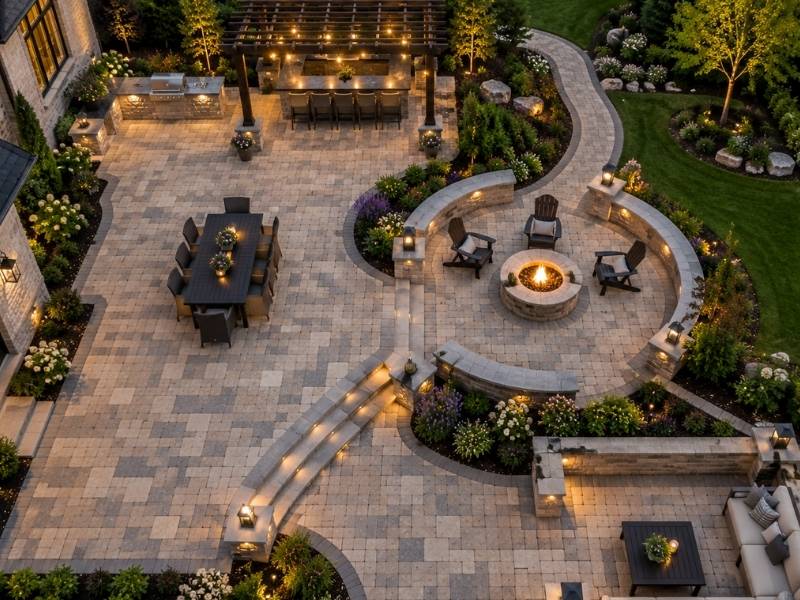
Curves are where pavers pull ahead of everything. A slab wants to be a rectangle, because forming a curve costs money. Units follow any shape you draw, and the cuts are the only added cost.
Ask these before you choose a surface
- What’s the ten-year plan for this area, including utilities and future structures?
- Does anything need to get dug up under this surface later?
- Is stormwater a permit issue on this property, and is there permeable credit available?
- How much sun does this area take in summer, and who’s walking on it barefoot?
- Is this at grade, or does it need to reach a raised door?
- What’s the price gap between the slab and the pavers, and what does the repair cost look like on each?
That last question is the honest one. Run both numbers over ten years, not one. The slab wins the quote and loses the decade, and if a contractor won’t discuss that with you, get another quote.
Frequently Asked Questions
Are Stone Pavers Better Than a Concrete Patio?
Stone pavers often provide better long-term performance because individual units can move slightly with the base and be repaired without replacing the entire surface. Concrete slabs are more likely to develop permanent cracks when the ground shifts, and repairs are usually more noticeable.
Do Stone Pavers Improve Drainage?
Yes, especially when installed as a permeable paving system. Standard stone pavers shed most surface water, while permeable systems allow water to pass through the joints into an engineered base below. Some municipalities also recognize permeable paving as part of stormwater management requirements.
Do Stone Pavers Stay Cooler Than Concrete?
Light-colored natural stone generally remains cooler under direct sunlight than many concrete surfaces. Textured stone also provides better traction when wet, making it a practical choice for pool decks, walkways, and sloped outdoor areas.
When Is a Concrete Patio the Better Option?
Concrete may be the better choice when minimizing upfront cost, meeting a tight construction schedule, or supporting permanent structures such as garages or storage buildings. The best material depends on the intended use, budget, and long-term maintenance expectations.
Can Damaged Stone Pavers Be Repaired?
Yes. One of the biggest advantages of stone pavers is that individual sections can be lifted, the base repaired, and the original stones reinstalled without replacing the entire surface. Keeping extra pavers from the original installation also makes future repairs blend in more naturally.